The Little Book of Talent is a great book on how to improve any skill from sports, to necessary life activites. I have found it useful in my golf game as well as learning the piano.
Coyle, Daniel. The Little Book of Talent. Bantam Books. New York. 2012.
Tip #1 Stare at who you want to become
If you were to visit a dozen talent hotbeds tomorrow, you would be struck by how much time the learners spend observing top performers. When I say "observing," I'm not talking about passively watching. I'm talking about staring--the kind of raw, unblinking, intensely absorbed gazes you see in hungry cats or newborn babies.
One of the keys to igniting your motivation is to fill your windshield with vivid images of your future self, and to stare at them every day. Another way of putting it is: "seeing it better than it is." Studies show that even a brief connection with a role model can vastly increase unconscious motivation. For example, being told that you share a birthday with a mathematician can improve the amount of effort you're willing to put into difficult math tasks by 62 percent.
Many talent hotbeds are fueled by the windshield phenomenon. In 1997, there were no South Korean golfers on the LPGA Tour. Today there more than forty, winning one-third of all events. Se Ri Pak won two majors in 1998, and through her, hundreds of South Korean girls were ignited by a new vision of their future selves. "If she can't do it, then why can't I?" Just take a look at Inbee Park who was inspiried by Se Ri Pak!

Think of your windshield as an energy source for your brain. Use pictures (the walls of many talent hotbeds are cluttered with photos and posters of their stars) or better yet, video.
One idea: Bookmark a few YouTube videos, and watch them before you practice, and/ or at night before you go to bed.

Tip #2 Spend 15 minutes a day engraving the skill on your brain
What is the best way to begin to learn a new skill? Many hotbeds use an approach I call the engraving method. Basically, they watch the skill being performed closely and with great intensity over and over, until they build a high-definition mental blueprint.


A few years back, for the TV show 60 Minutes, the tennis teacher and author Timothy Gallwey assembled a group of middle-aged people who'd never played tennis before. He gave them a brief test of ability, and then selected the woman who showed the least potential. Then, without uttering a word, Gallwey began to hit a forehand while the woman watched. He directed her attention to his feet, his grip, and the rhythm of the stroke. The woman watched intently and then began to emulate his moves. Within twenty minutes, she was hitting a shockingly decent forehand.
Another example of engraving, which involves the ears instead of the eyes, is the Suzuki method for learning music. Each day, separate from their lessons, Suzuki students listen to a menu of songs, beginning with "Twinkle, Twinkle, Little Star" and progressing by degrees to more complex tunes. Hearing the songs over and over and over again engraves the songs in the students' brains. The "listening practice" builds a strong detailed mental map, a series of points from which the success or failure of each following attempt can be measured.
The key to effective engraving is to create an intense connection: to watch and listen so closely that you can imagine the feeling of performing the skill.


Begin by asking yourself which of these skills need to be absolutely 100% consistent every single time. Which need to be executed with machine like precision? These are the hard skills. Then ask yourself which skills need to be flexible and variable, and depend on the situation? Which depend on instantly recognizing patterns and selecting one optimal choice? These are the soft skills.





Research shows that people who follow the strategy--reading ten pages once, then closing the book and writing a one-page summary--remember 50 percent more material over the long term than people who follow the strategy--reading those ten pages four times in a row, and trying to memorize them.
This is because of one of deep practice's most fundamental rules: learning is reaching. Passively reading a book--a relatively effortless process, letting the words wash over you like a warm bath--doesn't put you in the sweet spot. Less reaching equals less learning.
On the other hand, closing the book and writing a summary forces you figure out the key points (one set of reaches), process and organize those ideas so they make sense (more reaches), and write them on the page (still more reaches, along with repetition). The equation is always the same: More reaching equals more learning.

Tip #36 Invent Daily Tests (pg 75-76)
The important thing, the only thing, is to help the student push themselves. There are many ways to do that; whether it's money or chocolate or pride or something else doesn't really matter.
To invent a good test, ask yourself:
Tip #37 Choose the Best Practice Method
The biggest problem in choosing a practice strategy is not there are too few options, but that there are too many. How do you identify the best methods? This tip provides a way to measure practice effectiveness. It's called the REPS gauge. Each letter stands for a key element of deep practice.
R: Reaching and Repeating
E: Engagement
P: Purposefulness
S: Strong, Speedy Feedback
Reaching and Repeating: Does the practice have you operating on the edge of your ability, reaching and repeating?
Scenario: Two math teachers teaching the multiplication tables to thirty students.
Coyle, Daniel. The Little Book of Talent. Bantam Books. New York. 2012.
Tip #1 Stare at who you want to become
If you were to visit a dozen talent hotbeds tomorrow, you would be struck by how much time the learners spend observing top performers. When I say "observing," I'm not talking about passively watching. I'm talking about staring--the kind of raw, unblinking, intensely absorbed gazes you see in hungry cats or newborn babies.
One of the keys to igniting your motivation is to fill your windshield with vivid images of your future self, and to stare at them every day. Another way of putting it is: "seeing it better than it is." Studies show that even a brief connection with a role model can vastly increase unconscious motivation. For example, being told that you share a birthday with a mathematician can improve the amount of effort you're willing to put into difficult math tasks by 62 percent.
Many talent hotbeds are fueled by the windshield phenomenon. In 1997, there were no South Korean golfers on the LPGA Tour. Today there more than forty, winning one-third of all events. Se Ri Pak won two majors in 1998, and through her, hundreds of South Korean girls were ignited by a new vision of their future selves. "If she can't do it, then why can't I?" Just take a look at Inbee Park who was inspiried by Se Ri Pak!
Think of your windshield as an energy source for your brain. Use pictures (the walls of many talent hotbeds are cluttered with photos and posters of their stars) or better yet, video.
One idea: Bookmark a few YouTube videos, and watch them before you practice, and/ or at night before you go to bed.
Tip #2 Spend 15 minutes a day engraving the skill on your brain
What is the best way to begin to learn a new skill? Many hotbeds use an approach I call the engraving method. Basically, they watch the skill being performed closely and with great intensity over and over, until they build a high-definition mental blueprint.
A few years back, for the TV show 60 Minutes, the tennis teacher and author Timothy Gallwey assembled a group of middle-aged people who'd never played tennis before. He gave them a brief test of ability, and then selected the woman who showed the least potential. Then, without uttering a word, Gallwey began to hit a forehand while the woman watched. He directed her attention to his feet, his grip, and the rhythm of the stroke. The woman watched intently and then began to emulate his moves. Within twenty minutes, she was hitting a shockingly decent forehand.
Another example of engraving, which involves the ears instead of the eyes, is the Suzuki method for learning music. Each day, separate from their lessons, Suzuki students listen to a menu of songs, beginning with "Twinkle, Twinkle, Little Star" and progressing by degrees to more complex tunes. Hearing the songs over and over and over again engraves the songs in the students' brains. The "listening practice" builds a strong detailed mental map, a series of points from which the success or failure of each following attempt can be measured.
The key to effective engraving is to create an intense connection: to watch and listen so closely that you can imagine the feeling of performing the skill.
- For physical skills, project yourself inside the performer's body. Become aware of the movement, the rhythm; try to feel the interior shape of the moves.
- For mental skills, stimulate the skill by re-creating the expert's decision patterns. Chess players achieve this by replaying classic games, move by move
- public speakers do it by regiving great speeches complete with original inflections
- musicians cover their favorite songs
- some writers I know achieve this effect by retyping passages verbatim from great works. (It sounds kind of Zen, but it works)
Tip #3 Steal Without Apology
We are often told that talented people acquire their skill by following their "natural instincts." This sounds nice, but in fact it is baloney. All improvement is about absorbing and applying new information, and the best source of information is top performers. So steal it.
Stealing has a long tradition in art, sports, and design, where it often goes by the name of "influence." The young Steve Jobs stole the idea for the computer and drop-down menus from Xerox Palo Alto Research Center. The young Beatles stole the high "woooooo" sounds in "She Loves You" "From Me to You" and "Twist and Shout" from their idol Little Richard. The young Babe Ruth based his swing on the mighty uppercut of his hero, Shoeless Joe Jackson. As Pablo Picasso (no slouch at theft himself) put it, "Good artists borrow. Great artists steal."
Linda Septien, founder of the Septien School of Contemporary Music, a hotbed near Dallas that has produced millions of dollars in pop-music talent (including Demi Lovato, Ryan Cabrera, and Jessica Simpson), tells her students, "Sweetheart, you gotta steal like crazy. Look at every single performer better than you and see what they've got that you can use. Then make it your own." Septien follows her own advice, having accumulated fourteen three-ring notebooks' worth of ideas stolen from top performers. In plastic sleeves inside the binders, in some cases scribbled on cocktail napkins, reside tips on everything from how to hit a high note to how to deal with a rowdy crowd (a joke works best).
Stealing helps shed light on some mysterious patterns of talent--for instance, why the younger members of musical families so often are also the most talented. The difference can be explained partly by the windshield phenomenon, "connection with a role model can vastly increase unconscious motivation," and partly by theft. As they grow up, the younger kids have more access to good information. They have far more opportunity to watch their older siblings perform, to mimic, to see what works and what doesn't. In other words, to steal. When you steal, focus on specifics, not general impressions. Capture concrete facts: the angle of a golfer's left elbow at the top of the backswing; the curve of a surgeon's wrist; the precise shape and tension of a singer's lips as he hits that high note; the exact length of time a comedian pauses before delivering the punch line.
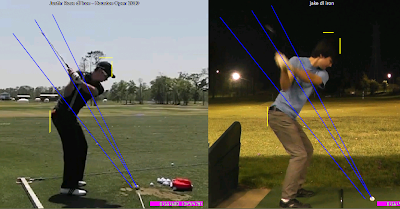

Ask yourself:
- What exactly are the critical moves here?
- How do they perform those moves differently than I do?
Tip #4 Buy a Notebook
A high percentage of top performers keeps some form of a daily performance journal. Tennis champion Serena Williams and former World Series MVP Curt Schilling use notebooks; rapper Eminem and the choreographer Twyla Tharp use shoeboxes which they fill with ideas written on scrap paper. What matters is not the precise form. What matters is that you write stuff down and reflect on it. Results from today. Ideas for tomorrow. Goals for next week. A notebook works like a map: it creates clarity.

Tip #51 Keep Your Big Goals Secret
While its natural and oh so tempting to want to announce big goals, it's smarter to keep them to yourself. In a 2009 at New York University, 163 subjects were given a difficult work project and 45 minutes to spend on it. Half the subjects were told to announce their goals, while half were told to keep quiet. The subjects who announced their goals quit after only an average of 33 minutes and reported feeling satisfied with their work. Those who kept their mouths shut, however, worked the entire 45 minutes and remained strongly motivated. (In fact, when the experiment ended, they wanted to keep working.)
Telling others about your big goals makes them less likely to happen, because it creates an unconscious payoff--tricking our brains into thinking we've already accomplished the goal. Keeping our big goals to ourselves is one of the smartest goals we can set.
Tip #5 Be willing to be stupid
While its natural and oh so tempting to want to announce big goals, it's smarter to keep them to yourself. In a 2009 at New York University, 163 subjects were given a difficult work project and 45 minutes to spend on it. Half the subjects were told to announce their goals, while half were told to keep quiet. The subjects who announced their goals quit after only an average of 33 minutes and reported feeling satisfied with their work. Those who kept their mouths shut, however, worked the entire 45 minutes and remained strongly motivated. (In fact, when the experiment ended, they wanted to keep working.)
Telling others about your big goals makes them less likely to happen, because it creates an unconscious payoff--tricking our brains into thinking we've already accomplished the goal. Keeping our big goals to ourselves is one of the smartest goals we can set.
Tip #5 Be willing to be stupid
Teammates of the hockey star Wayne Gretzky would occasionally witness a strange sight: Gretzky falling while he skated through solitary drills on the ice. While the spectacle of the planet's greatest hockey player toppling over like a grade-schooler might seem surprising, it actually makes perfect sense. As skilled as he was, Gretzky was determined to improve, to push the boundaries of the possible. The only way that happens is to build new connections in the brain--which means reaching, failing, and looking stupid.
Feeling stupid is no fun. But being willing to be stupid--in other words, being willing to risk the emotional pain of making mistakes--is absolutely essential because reaching, failing, and reaching again is the way your brain grows and forms new connections. When it comes to developing talent, remember, mistakes are not really mistakes--they are the guideposts you use to get better. One way some places encourage "productive mistakes is to establish rules that encourage people to make reaches that might otherwise feel strange and risky--in effect nudging them into the sweet spot at the edge of their ability. For example, students at the Meadowmount School of Music often practice according to an informal rule: If a passerby can recognize a song, it's being played too fast. The point of this super-exaggerated slowness (which produces songs that resemble those of humpback whales) is to reveal small mistakes that might have gone undetected, and thus create more high-quality reaches.
Businesses do it too. Google offers "20 percent time": Engineers are given 20 percent of their work time to spend on private, nonapproved projects they are passionate about, and thus ones for which they are more likely to take risks. I've encountered numerous organizations that have employees sign a "contract" affirming that they will take risks and make mistakes.
Whatever the strategy, the goal is always the same: to encourage reaching, and to reinterpret mistakes so that they're not verdicts, but the information you use to navigate to the correct move.
Tip #7 Before you start figure out if it's a hard skill or a soft skill
The first step toward building a skill is to figure out exactly what type of skill you're building. Every skill falls into one of two categories: hard skills and soft skills.
The point of this tip is that hard skills and soft skills are different (they use different structures of circuits in your brain), and thus are developed through different methods of deep practice.
Begin by asking yourself which of these skills need to be absolutely 100% consistent every single time. Which need to be executed with machine like precision? These are the hard skills. Then ask yourself which skills need to be flexible and variable, and depend on the situation? Which depend on instantly recognizing patterns and selecting one optimal choice? These are the soft skills.
A quick litmus test: Is a teacher or coach usually involved in the early stages? If the answer is yes, then it's likely a hard skill. If not, then it's a soft skill.
Hard/ high precision skills are actions that are performed as correctly and consistently as possible every time. They are skills that have one path to an ideal result; skills that you could imagine being performed by a reliable robot. Hard skills are about repeatable precision, and tend to be found in specialized pursuits, particularly physical ones. Some examples:
- a golfer swinging a club, a tennis player serving, or any precise, repeating athletic move.
- a child performing basic math (ex: addition or multiplication tables)
- a violinist playing a specific chord
- a basketball player shooting a free throw
- a young reader translating letter shapes into sounds and words
- a worker on an assembly line, attaching a part
Here your goal is to build a skill that functions like a Swiss watch reliable, exact, and performed the same way every time, automatically, without fail. Hard skills are about ABC: Always Being Consistent.
To develop reliable hard skills, you need to connect the right wires in your brain. In order to do this, it helps to be careful, slow, and keenly attuned to errors. To work like a careful carpenter. A good example of hard-skill carpentry is found in the Suzuki music instruction method. Suzuki students begin by spending several lessons simply by learning to hold the bow and the violin with the right finger curve and pressure, the right stance, the right posture. Using rhyme and repetition, they learn to move the bow without the violin "up like a rocket, down like the rain, back and forth like a choo-choo train." Each fundamental, no matter how humble seeming, is introduced as a precise skill of huge importance (which of course it really is) taught via a series of vivid images, and worked on over and over until it is mastered. The vital pieces are built, rep by careful rep. Another example can be found on a worn piece of paper inside the wallet of Tom Brady. On that paper is a handwritten list of fundamental keys to throwing technique. All of them are simple (ex: throw down the hall") and all of them connect to the drills Brady's been doing with his personal coach Tom Martinez.
Precision especially matters early on, because the first reps establish the pathways for the future. The first repetitions are like the first sled tracks on fresh snow: on subsequent tries, your sled will tend to follow those grooves. When you build hard skills, be precise and measured. Go slowly. Make one simple move at a time, repeating and perfecting it before you move on. Pay attention to errors, and fix them, particularly at the start. Learning fundamentals only seems boring--in fact, it's the key moment of investment. If you build the right pathway now, you'll save yourself a lot of time and trouble down the line.
Soft/ High flexibility skills on the other hand are those that have many paths to a good result, not just one. These skills aren't about doing the same thing perfectly every time, but rather about being agile and interactive; about instantly recognizing patterns as they unfold and making smart, timely choices. Soft skills tend to be found in broader, less-specialized pursuits, especially those that involve communication, such as:
- a soccer player sensing a weakness in the defense and deciding to attack
- a stock trader spotting a hidden opportunity amid a chaotic trading day
- a novelist instinctively shaping the twists of a complicated plot
- a singer subtly interpreting the music to highlight emotion
- a police officer on a late-night patrol
- A CEO "reading a room" in a tense meeting or negotiation
Soft skills are about the three Rs: Reading, Recognizing, and Reacting.
Soft skills catch our eye because they are beautiful: picture soccer star Lionel Messi improvising his way to a brilliant goal, or Jimi Hendrix blazing through a guitar solo, or Craig Ferguson riffing through a comic monologue. They are the result of super-fast brain software recognizing patterns and responding in just the right way. While the hard skills are best put together with measured precision, soft skills are built by playing and exploring inside challenging, ever-changing environments. These are the places where you encounter different obstacles and respond to them over and over, building the network of sensitive wiring you need to read, recognize, and react. In other words, to build soft skills you should behave more like a skateboarder in a skateboard park: aggressive, curious, and experimental, always seeking new ways to challenge yourself.
Brazil, home of many of the world's most skilled soccer players, develops its players through a unique game called futebol de salao ("soccer in the room"). This insanely fast, tightly compressed five-on-five version of the game--played on the size of a basketball court--creates 600% more touches, demands instant pattern recognition and in the words of Emilio Miranda, a professor of soccer at the University of Sao Paulo, serves as Brazil's "laboratory of improvisation."
Even the most creative skills--especially the most creative skills--require long periods of clumsiness. The Bronte sisters, three of whom became world class novelists, built their talents by writing thousands of pages of stories in tiny homemade books when they were children. The early Bronte stories, like Tina Fey's early improv work, aren't very good--and that's precisely the point. They became skilled by performing thousands of intensive reaches and reps in an endlessly challenging, variable, engaging space.
When you practice a soft skill, focus on making a high number of varied reps, and on getting clear feedback. Don't worry too much about making errors--the important thing is to explore. Soft skills are often more fun to practice, but they're also tougher because they demand that you coach yourself. After each session ask yourself, what worked? What didn't? And why?
Tip #10 Honor the hard skills
As you probably recognize, most talents are not exclusively hard skills or soft skills, but rather a combination of the two. For example, think of a violinist's precise finger placement to play a series of notes (a hard skill) and her ability to interpret the emotion of a song (a soft skill). Or a quarterback's ability to deliver an accurate spiral (a hard skill) and his ability to swiftly read a defense (a soft skill).
The point of this tip is simple: prioritize the hard skills because in the long run they're more important to our talent. At Spartak, the Moscow tennis club, there is a rule that young players must wait years before entering competitive tournaments. "Technique is everything," said a coach, Larisa Preobrazhenskaya. "If you begin playing without technique it is a big mistake."
You might be surprised to learn that many top performers place great importance on practicing the same skills they practiced as beginners. The cellist Yo-Yo Ma spends the first minutes of every practice playing single notes on his cello. The NFL quarterback Peyton Manning spends the first segment of every practice doing basic footwork drills--the kind they teach twelve-year-olds. These performers don't say to themselves, "Hey, I'm one of the most talented people in the world--shouldn't I be doing something more challenging?" They resist the temptation of complexity and work on the task of honing and maintaining their hard skills, because those form the foundation of everything else.
Think of your talent as a big redwood tree. First build the trunk, then work on the branches.
Tip #11 Don't fall for the prodigy myth
Most of us grow up being taught that talent is an inheritance, like brown hair or blue eyes. Therefore, we presume that the surest sign of talent is early, instant, effortless success, i.e., being a prodigy. In fact, a well-established body of research shows that that assumption is false. Early success turns out to be a weak predictor of long-term success.
Many top performers are overlooked early on, then grow quietly into stars. This list includes Michael Jordan (cut from his high school varsity team as a sophomore), Charles Darwin (considered slow and ordinary by teachers), Walt Disney (fired from an early job because he "lacked imagination"), Albert Einstein, Thomas Edison, Winston Churchill, Lucille Ball, and so on. One theory why prodigy's seem to fall away is that the praise and attention they receive lead them to instinctively protect their magical status by taking fewer risks, which eventually slows their learning. *Note: I believe however that with all these books and information on the market that this is becoming less and less of a phenomenon, since prodigy's have figured out that they need to keep taking risks.*
The talent hotbeds are not built on identifying talent, but on constructing it, day by day. They are not overly impressed by precociousness and do not pretend to know who will succeed.
Anson Dorrance, the head coach of the University of North Carolina women's soccer team, which he has lead to 21 national championship wins, sums this up nicely. "One of the most unfortunate things I see when identifying youth players is the girl who is told over the years how great she is. By the time she's a high school freshman, she starts to believe it. By her senior year she's fizzled out. Then there's her counterpart: a girl waiting in the wings, who quietly and with determination decides she's going to make something of herself. Invariably, this humble, hardworking girl is the one who becomes a real player."
If you have early success, do your best to ignore the praise and keep pushing yourself to the edges of your ability, where improvement happens. If you don't have early success, don't quit. Instead, treat your early efforts as experiments, not as verdicts. Remember, this is a marathon, not a sprint.

Tip #12 Five ways to pick a high-quality teacher or coach
Great teachers, coaches, and mentors, like any rare species can be identified by a few characteristic traits. The following rules are designed to help you sort through the candidates and make the best choice for yourself.
1) Avoid someone who reminds you of a courteous waiter
This species of teacher/coach/mentor is increasingly abundant in our world: one who focuses his efforts on keeping you comfortable and happy, on making things go smoothly, with a minimum of effort. This is the kind of person who covers a lot of material in a short time, smiles a lot, and says things like, "don't worry, no problem, we can take care of that later." This is a good person to have as your waiter in a restaurant, but a terrible person to have as your teacher, coach, or mentor.
2) Seek someone who scares you a little
In contrast to encounters with courteous waiters, encounters with great teachers/ coaches/mentors tend to be filled with unfamiliar emotion: feelings of respect, admiration, and, often a shiver of fear. This is a good sign. Look for someone who:
Watches you closely: He is interested in figuring you out--what you want, where you're coming from, what motivates you.
Is action-oriented: She often won't want to spend a lot of time chatting--instead, she'll want to jump into a few activities immediately, so she can get a feel for you and vice versa.
Is honest, sometimes unnervingly so: He will tell you the truth about your performance in clear language. This stings at first. But you'll come to see that it's not personal--it's the information you can use to get better. You are not looking for a buddy or a parent figure. You're looking for someone solid, someone you trust, someone with whom you take a journey.
3) Seek someone who gives a short, clear directions
Most great teachers/coaches/mentors do not give long winded speeches. They do not give sermons or long lectures. Instead they give short, unmistakable clear directions, they guide you to a target. John Wooden's average utterance lasted only four seconds. This underlies a large truth: teaching is not an eloquence contest; it is about creating a connection and delivering useful information.

4) Seek someone who loves teaching fundamentals
Great teachers will often spend entire practice sessions on one seemingly small fundamental--for example, the way you grip a golf club, or the way you pluck a single note on a guitar. This might seem strange, but it reflects their understanding of a vital reality: these fundamentals are the core of your skills. The more advanced you are, the more crucial they become.
5) other things being equal, pick the older person
Teaching is like any other talent: it takes time to grow. This is why so many hotbeds are led by people in their sixties and seventies. Great teachers are first and foremost learners, who improve their skills with each passing year. That's not to say there aren't any great teachers under thirty or that all coaches with gray hair are genius's. But other things being equal, go with someone older.

Tip #13 Find the sweet spot
There is a place, right on the edge of your ability, where you learn best and fastest. It's called the sweet spot, here's how to find it.
Comfort Zone:
Sensations: Ease, effortlessness. You're working, but not reaching or struggling.
Percentage of Successful Attempts: 80% and above
Sweet Spot:
Sensations: frustration, difficulty, alertness to errors. You're fully engaged in an intense struggle--as if you're stretching with all your might for a nearly unreachable goal, brushing it with your fingertips, then reaching again.
Percentage of successful attempts: 50-80%
Survival Zone:
Sensations: confusion, desperation. You're overmatched: scrambling, thrashing, and guessing. You guess right sometimes, but it's mostly luck.
Percentage of successful attempts: below 50%
To understand the importance of the sweet spot, consider Clarissa, a freckle-faced 13 year old clarinet player who was part of a study by two Australian music psychologists named Gary Mcpherson and James Renwick. Clarissa was an average musician in every sense of the word--average ability, average practice habits, average motivation. But one morning, a remarkable thing happened: Clarissa accomplished a month's worth of practice in five minutes.
Here's what it looked like: Clarissa played a few notes. Then she made a mistake and immediately froze, as if the clarinet were electrified. She peered closely at the sheet music, reading the notes. She hummed the notes to herself. She fingered the keys in a fast silent rehearsal. Then she started again, got a bit farther, made another mistake, stopped again, and went back to the start. In this fashion, working instinctively she learned the song. McPherson calculated that she learned more in that span of five minutes than she would have learned in an entire month practicing her normal way, in which she would have learned in an entire month practicing her normal way, in which she played songs straight through, ignoring any mistakes.
Why? Picture the wires of Clarissa's brain during those five minutes. Each time she made a mistake, she was 1) sensing it and 2) fixing it, welding the right connection in her brain. Each time she repeated the passage, she was strengthening those connections and linking them together. She was not just practicing, She was building her brain. She was in the sweet spot.
Locating your sweet spot requires some creativity. For instance, some golfers work on their swings underwater (which slows them down so they can sense and fix their mistakes). Some musicians play songs backward (which helps them better sense the relationship between the notes). These are different methods, but the underlying pattern is the same: seek out ways to stretch yourself. Play on the edges of your competence. As Albert Einstein said, "One must develop an instinct for what one can just barely achieve through one's greatest efforts." The key word is "barely." Ask yourself: if you tried your absolute hardest, what could you almost do? Mark the boundary of your current ability, and aim a little beyond it. That's your spot.
Tip #14 Take off your watch
Deep practice is not measured in minutes or hours, but in the number of high quality reaches and repetitions you make--basically, how many new connections you form in your brain. Instead of counting minutes or hours, count reaches and reps. Instead of saying, "I'm going to practice piano for 20 minutes," tell yourself, "I'm going to do five intensive reps of that new song." Instead of planning to hit golf balls for an hour, plan to make 25 quality swings with each club. Instead of reading over that textbook for an hour, make flash cards and grade yourself on your efforts. Ignore the clock and get to the sweet spot, even if it's only for a few minutes, and measure your progress by what counts: reaches and reps.

Tip #16 Each day, try to build one perfect chunk
In our busy lives, it's sometimes tempting to regard merely practicing as a success. We complete the appointed hour and sigh victoriously--mission accomplished! But the real goal isn't practice; it's progress. As John Wooden put it, "Never mistake mere activity for accomplishment."
One useful method is to set a daily SAP: Smallest Achievable Perfection. In this technique, you pick a single chunk that you can perfect--not just improve, not just "work on," but get 100 percent consistently correct. For example, a tennis player might choose the service toss; a salesperson might choose the twenty-second pitch he'll make to an important client. The point is to take the time to aim at a small, defined target, and then put all your effort toward hitting it.
After all, you aren't built to be transformed in a single day. You are built to improve little by little, connection by connection, rep by rep. As Wooden also said, "Don't look for the big, quick improvement. Seek the small improvement one day at a time. That's the only way it happens--and when it happens, it lasts."

Tip #17 Embrace struggle
At all of the talent hotbeds, from Moscow to Dallas to Brazil to New York, I saw the same facial expression: eyes narrow, jaw tight, nostrils flared, the face of someone intently reaching for something, falling short, and reaching again. This is not a coincidence. Deep practice summed up: struggle. Most of us instinctively avoid struggle, because it's uncomfortable. It feels like failure. However, when it comes to developing your talent, struggle isn't an option--it's a biological necessity.
Tip #18 Choose five minutes a day over an hour a week
With deep practice, small daily practice "snacks" are more effective than once a week practice binges. The reason has to do with the way our brains grow--incrementally, a little each day, even as we sleep. Daily practice, even for five minutes, nourishes this process, while more occasional practice forces your brain to play catch-up. Or, as the music-education pioneer Shinichi Suzuki puts it, "Practice on the days that you eat."
The other advantage of practicing daily is that it becomes a habit. The act of practicing--making time to do it, doing it well--can be thought of as a skill in itself, perhaps the most important skill of all. Give it time. According to research, establishing a new habit takes about thirty days.
Tip #19 Don't do drills. Instead play small, addictive games
This tip is about the way you think your practice. The term "drill" evokes a sense of drudgery and meaninglessness. It's mechanical, repetitive, and boring--as the saying goes, drill and kill. Games are precisely the opposite. They mean fun, connectedness, and passion. And because of that, skills improve faster when they're looked at this way.
Dig into the biography of any world-class performer and you'll uncover a story about a small, addictive game. They have a juicy addictive sense of involvement, fun, and excitement. Good coaches share a knack for transforming the most mundane activities--into games. The governing principle is: if it can be counted, it can be turned into a game. Keep track of a score, give yourself points for each perfect chord, shot, etc. Then try to beat your score.
Tip #20 Practice Alone
Solo practice works because it's the best way to 1) seek out the sweet spot at the edge of your ability, and 2) develop discipline, because it doesn't depend on others.
World class performers were found to spend 5 times as many hours practicing alone.
Tip #21 Think in images
Tip #33 To learn from a book, close the book (pg 71-72)In our busy lives, it's sometimes tempting to regard merely practicing as a success. We complete the appointed hour and sigh victoriously--mission accomplished! But the real goal isn't practice; it's progress. As John Wooden put it, "Never mistake mere activity for accomplishment."
One useful method is to set a daily SAP: Smallest Achievable Perfection. In this technique, you pick a single chunk that you can perfect--not just improve, not just "work on," but get 100 percent consistently correct. For example, a tennis player might choose the service toss; a salesperson might choose the twenty-second pitch he'll make to an important client. The point is to take the time to aim at a small, defined target, and then put all your effort toward hitting it.
After all, you aren't built to be transformed in a single day. You are built to improve little by little, connection by connection, rep by rep. As Wooden also said, "Don't look for the big, quick improvement. Seek the small improvement one day at a time. That's the only way it happens--and when it happens, it lasts."
Tip #17 Embrace struggle
At all of the talent hotbeds, from Moscow to Dallas to Brazil to New York, I saw the same facial expression: eyes narrow, jaw tight, nostrils flared, the face of someone intently reaching for something, falling short, and reaching again. This is not a coincidence. Deep practice summed up: struggle. Most of us instinctively avoid struggle, because it's uncomfortable. It feels like failure. However, when it comes to developing your talent, struggle isn't an option--it's a biological necessity.
Tip #18 Choose five minutes a day over an hour a week
With deep practice, small daily practice "snacks" are more effective than once a week practice binges. The reason has to do with the way our brains grow--incrementally, a little each day, even as we sleep. Daily practice, even for five minutes, nourishes this process, while more occasional practice forces your brain to play catch-up. Or, as the music-education pioneer Shinichi Suzuki puts it, "Practice on the days that you eat."
The other advantage of practicing daily is that it becomes a habit. The act of practicing--making time to do it, doing it well--can be thought of as a skill in itself, perhaps the most important skill of all. Give it time. According to research, establishing a new habit takes about thirty days.
Tip #19 Don't do drills. Instead play small, addictive games
This tip is about the way you think your practice. The term "drill" evokes a sense of drudgery and meaninglessness. It's mechanical, repetitive, and boring--as the saying goes, drill and kill. Games are precisely the opposite. They mean fun, connectedness, and passion. And because of that, skills improve faster when they're looked at this way.
Dig into the biography of any world-class performer and you'll uncover a story about a small, addictive game. They have a juicy addictive sense of involvement, fun, and excitement. Good coaches share a knack for transforming the most mundane activities--into games. The governing principle is: if it can be counted, it can be turned into a game. Keep track of a score, give yourself points for each perfect chord, shot, etc. Then try to beat your score.
Tip #20 Practice Alone
Solo practice works because it's the best way to 1) seek out the sweet spot at the edge of your ability, and 2) develop discipline, because it doesn't depend on others.
World class performers were found to spend 5 times as many hours practicing alone.
Tip #21 Think in images
- take the tennis racket back as if you were sweeping dishes off a coffee table
- sing the phrase like a balloon running out of air
- touch the strings as if they were burning hot
- let the ball kiss your foot
Images are far easier to grasp, recall, and perform. Whenever possible, create a vivid image for each chunk you want to learn.
Tip #22 Pay attention immediately after you make a mistake
People who pay deeper attention to an error learn significantly more than those who ignore it. Never take mistakes as a flaw of your person.
Tip #23 Visualize the wires of your brain forming new connections
When you go to the sweet spot on the edge of your ability and reach beyond it, you are forming and strengthening new connections in your brain. Mistakes aren't really mistakes, then--they're the information you use to build the right links. The more you pay attention to mistakes and fix them, the more of the right connections you'll be building inside your brain. Visualizing this process as it happens helps you reinterpret mistakes as what they actually are: tools for building skill.
Tip #24 Visualize the wires of your brain getting faster
Every time you practice deeply--the wires of your brain get faster. Over time, signal speeds increase to 200 mph from 2 mph. When you practice, it's useful and motivating to visualize the pathways of your brain being transformed from simple copper wires to high speed broadband, because that's what's really happening.
Tip #25 Shrink the space
Smaller practice spaces can deepen practice when they are used to increase the number and intensity of reps and clarify the goal. This doesn't not just apply to physical space. Poets and writers shrink the field by using restrictive meters to force themselves into a small creative form. Comedy writers use the 140-character arena of Twitter as a space to hone their skills. Businesses can also benefit from compression: Toyota trains new employees by shrinking the assembly line into a single room filled with toy sized replicas of its equipment. The company has found that this mini-training is more effective than training on the actual production line. Ask yourself: what's the minimum space needed to make these reaches and reps? Where is extra space hindering fast and easy communication?
Tip #26 Slow it down (Even slower than you think)
When we learn how to do something new, our immediate urge is to do it again, faster. This is known as the "Hey, Look at me! reflex. This urge for speed makes perfect sense, but it can also create sloppiness, particularly when it comes to hard skills. We trade precision and long term performance for a temporary thrill. So slow it down
Super slow practice works like a magnifying glass. It lets us sense our errors more clearly and thus fix them. Slow practice is used in many talent hotbeds to teach hard skills, from the Spartak Tennis Club (where students swing in such slow motion they resemble ballet dancers) to the Septien School of Contemporary Music (where performers learn a song by singing one slow note at a time). Ben Hogan routinely practiced so slowly that when he finally contacted the ball it moved about an inch. As the saying goes, "it's not how fast you do it. It's how slowly you can do it correctly."


Tip #28 Mime it
At talent hotbeds you see people swinging golf clubs and tennis rackets at empty air, playing piano on tabletops, and skiing down imaginary slalom courses with their feet fixed on the floor. It looks crazy, but from a deep practice perspective it makes sense. Removing everything except the essential action lets you focus on what matters most: making the right reach.

Tip #29 When you get it right, mark the spot
One of the most fulfilling moments in a practice session is when you have your first perfect rep. When this happens, freeze. Rewind the mental tape and play the move again in your mind. Memorize the feeling, the rhythm, the physical and mental sensations. The point is to mark this moment--this is the spot where you want to go again and again. This is not the finish--this is the new starting line for perfecting the skill until it becomes automatic. "Practice begins when you get it right."
Tip #23 Visualize the wires of your brain forming new connections
When you go to the sweet spot on the edge of your ability and reach beyond it, you are forming and strengthening new connections in your brain. Mistakes aren't really mistakes, then--they're the information you use to build the right links. The more you pay attention to mistakes and fix them, the more of the right connections you'll be building inside your brain. Visualizing this process as it happens helps you reinterpret mistakes as what they actually are: tools for building skill.
Tip #24 Visualize the wires of your brain getting faster
Every time you practice deeply--the wires of your brain get faster. Over time, signal speeds increase to 200 mph from 2 mph. When you practice, it's useful and motivating to visualize the pathways of your brain being transformed from simple copper wires to high speed broadband, because that's what's really happening.
Tip #25 Shrink the space
Smaller practice spaces can deepen practice when they are used to increase the number and intensity of reps and clarify the goal. This doesn't not just apply to physical space. Poets and writers shrink the field by using restrictive meters to force themselves into a small creative form. Comedy writers use the 140-character arena of Twitter as a space to hone their skills. Businesses can also benefit from compression: Toyota trains new employees by shrinking the assembly line into a single room filled with toy sized replicas of its equipment. The company has found that this mini-training is more effective than training on the actual production line. Ask yourself: what's the minimum space needed to make these reaches and reps? Where is extra space hindering fast and easy communication?
Tip #26 Slow it down (Even slower than you think)
When we learn how to do something new, our immediate urge is to do it again, faster. This is known as the "Hey, Look at me! reflex. This urge for speed makes perfect sense, but it can also create sloppiness, particularly when it comes to hard skills. We trade precision and long term performance for a temporary thrill. So slow it down
Super slow practice works like a magnifying glass. It lets us sense our errors more clearly and thus fix them. Slow practice is used in many talent hotbeds to teach hard skills, from the Spartak Tennis Club (where students swing in such slow motion they resemble ballet dancers) to the Septien School of Contemporary Music (where performers learn a song by singing one slow note at a time). Ben Hogan routinely practiced so slowly that when he finally contacted the ball it moved about an inch. As the saying goes, "it's not how fast you do it. It's how slowly you can do it correctly."
Tip #28 Mime it
At talent hotbeds you see people swinging golf clubs and tennis rackets at empty air, playing piano on tabletops, and skiing down imaginary slalom courses with their feet fixed on the floor. It looks crazy, but from a deep practice perspective it makes sense. Removing everything except the essential action lets you focus on what matters most: making the right reach.
Tip #29 When you get it right, mark the spot
One of the most fulfilling moments in a practice session is when you have your first perfect rep. When this happens, freeze. Rewind the mental tape and play the move again in your mind. Memorize the feeling, the rhythm, the physical and mental sensations. The point is to mark this moment--this is the spot where you want to go again and again. This is not the finish--this is the new starting line for perfecting the skill until it becomes automatic. "Practice begins when you get it right."
Research shows that people who follow the strategy--reading ten pages once, then closing the book and writing a one-page summary--remember 50 percent more material over the long term than people who follow the strategy--reading those ten pages four times in a row, and trying to memorize them.
This is because of one of deep practice's most fundamental rules: learning is reaching. Passively reading a book--a relatively effortless process, letting the words wash over you like a warm bath--doesn't put you in the sweet spot. Less reaching equals less learning.
On the other hand, closing the book and writing a summary forces you figure out the key points (one set of reaches), process and organize those ideas so they make sense (more reaches), and write them on the page (still more reaches, along with repetition). The equation is always the same: More reaching equals more learning.
Tip #36 Invent Daily Tests (pg 75-76)
The important thing, the only thing, is to help the student push themselves. There are many ways to do that; whether it's money or chocolate or pride or something else doesn't really matter.
To invent a good test, ask yourself:
- What's one key element of this skill?
- How can I isolate my accuracy or reliability, and measure it?
- How can I make it fun, quick, repeatable, so I can track my progress?
- Practicing correctly
- Getting a great coach
- Total Concentration
Tip #37 Choose the Best Practice Method
The biggest problem in choosing a practice strategy is not there are too few options, but that there are too many. How do you identify the best methods? This tip provides a way to measure practice effectiveness. It's called the REPS gauge. Each letter stands for a key element of deep practice.
R: Reaching and Repeating
E: Engagement
P: Purposefulness
S: Strong, Speedy Feedback
Reaching and Repeating: Does the practice have you operating on the edge of your ability, reaching and repeating?
Scenario: Two math teachers teaching the multiplication tables to thirty students.
- Teacher A selects a single student to write the tables on the board
- Teacher B creates a "game show" format in which a multiplication problem is posed verbally to the entire class, then a single student is called on to answer
Result: Teacher B chose the better option because it creates thirty reaches per question. In Classroom A, only one student has to reach--everybody else can lean back and observe. In Classroom B, however, every single member of the class has to reach in case their name is called.
Engagement: Is the practice immersive? Does it command your attention? Does it use emotion to propel you toward a goal?
Scenario: two trumpet students trying to learn a short, touch passage in a son.
- Trumpeter A plays the passage twenty times
- Trumpeter B tries to play the passage perfectly--with zero mistakes--five times in a row. If she makes any mistake, the count goes back to zero and she starts over
Result: Student B made the better choice, because the method is more engaging. Playing a passage twenty times in a row is boring, a chore where you're simply counting the reps until you're done. But playing five times perfectly, when any mistake sends you back to zero is intensively engaging.
Purposefulness: Does the task directly connect to the skill you want to build?
Scenario: Two basketball teams keep losing games because of missed free throws.
- Team A practices free throws at the end of a practice, with each player shooting fifty free throws alone.
- Team B practices free throws intermittently during a full-court scrimmage, with the fouled player shooting while tired and under pressure, as in a game.
Result: Team B made the better choice, because their practice connects to the skill they want to build, the ability to make free throws under pressure, while exhausted. (No player ever gets to shoot fifty straight in a game).
Strong, Speedy Feedback: Does the learner receive a stream of accurate information about his performance--where he succeeded and where he made mistakes?
Scenario: two high school students trying to improve their SAT scores.
- Student A spends a Saturday taking a mock version of the SAT test, then receives the test results one week later.
- Student B spends a Saturday taking a mini version of each section, grading herself and reviewing each test in detail as soon as it's completed.
Result: Student B made the better choice, because the feedback is direct and immediate. Learning swiftly where she went wrong (and where she went right) will tend to stick, while finding out a week later will have little effect.
The idea of this gauge is simple: when given a choice between two practice methods, or when you're inventing a new test or game, pick the one that maximizes these four qualities, the one with the most REPS. The larger lesson here is to pay attention to the design of your practice. Small changes in method can create large increases in learning velocity.
Tip #38 Stop Before You're Exhausted
In many skills, particularly athletic, medical, and military ones, there's a long tradition of working until total exhaustion. This tradition has its uses, particularly for improving fitness and mental toughness, and for forging emotional connections within a group. But when it comes to learning, the science is clear: exhaustion is the enemy. Fatigue slows the brain. It triggers errors, lessons concentration, and leads to shortcuts that create bad habits. It's no coincidence that most talent hotbeds put a premium on practicing when people are fresh, usually in the morning, if possible. When exhaustion creeps in, it's time to quit.
Tip #39 Practice Immediately After Performance
The previous tip was about the importance of practicing when you're fresh. This tip is about a different kind of freshness, which comes in the moment just after a performance, game, or competition. At that moment, practicing is probably the last thing you want to do. But it's the first thing you should do, if you're not too worn out, because it helps you target your weak points and fix them, as the golfer Jack Nicklaus said, "I always achieve my most productive practice after an actual round. Then, the mistakes are fresh in my mind and I can go to the practice tee and work specifically on those mistakes.
Tip #40 Just Before Sleep Watch a Mental Movie
This is a useful habit that I've picked up from dozens of top performers, ranging from surgeons, to athletes, to comedians. Just before falling asleep they play a movie of their idealized performance in their heads. A wide body of research supports the idea, linking visualization to improved performance, motivation, mental toughness, and confidence. Treat it as a way to rev the engine of your unconscious mind, so it spends more time churning towards your goals.
Tip #41 End on a Positive Note
A practice session should end like a good meal--with a small, sweet reward. It could be playing a favorite game, or it could be quite literal (chocolate works quite well).
Tip #43 Embrace Repetition
Repetition has a bad reputation. We tend to think of it as dull and uninspiring. But this perception is titanically wrong. Repetition is the single most important lever we have to improve our skills, because it uses built-in mechanism to make the wires of our brains work faster and more accurate (see appendix pg 117).