Friday, October 28, 2016

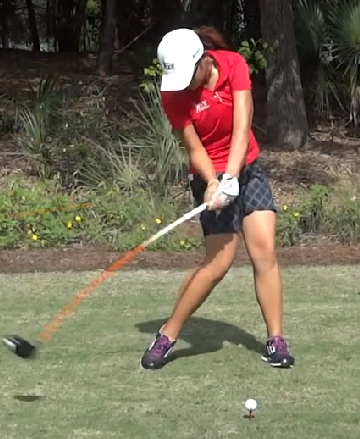
Lydia Ko when she was swinging her best

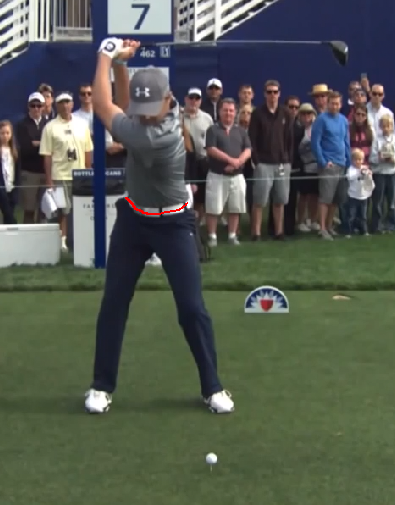
As some are beginning to notice, Lydia Ko is starting to slump a little bit.  There are some concrete reasons why her game has started on the wrong path.  And it has to do with the changes she has made with her instructor David Leadbetter on her golf swing.  On the right side is her latest swing from 6 months ago.  
  

This is her old setup.  Her left hand grip is a standard strong grip as well as her right hand grip.  Now we can see both her grips are weaker.  This change toward weaker grips is going to straight away promote an open clubface throughout the swing which inevitably will lead to a rolling release (which is bad because it increases the timing required to hit consistently on target shots).  So unfortunately since these great natural talents are unaware of what makes them great, a kind unassuming instructor who has the "credibility" of helping some big name players can talk them into changing to become even better or to gain more distance.

Unfortunately, these changes are just making her more inconsistent and although sure she may be a 5 or even 10 yards longer, if she keeps hitting it offline like she is right now, she will certainly lose that #1 world ranking for good.  Note: Jordan Spieth is on this track too.


     Not much difference here


Look how she is loading into her left side before her backswing is finished.  This is going to lead to less rotation and invite a flip and roll increasing the chances of an inaccurate shot.  This is the difference between Ben Hogan and her.  Ben Hogan had great body rotation and had a great impact with a bowed left wrist and stable clubface through impact.  This is what Lydia had before meeting Leadbetter and it is why she was so consistently great.  But now she is working towards the opposite of those moves that the best ball strikers including Hogan had.  She is losing her body rotation by sliding onto her left leg -- which is affecting the once great impact she had and destabilizing her clubface through impact.


Look at how much further left she is nowadays.  And the rotation she once had is almost gone.  Also you can tell that now she has almost no Right Lateral Bend in her spine (look at the green lines -- she used to have the curve in the right side of her body indicating the Right Lateral Bend) which means that her right bicep will likely contract too early leading to the flip and roll because an early right bicep contracting causes the lag to be released.    


From these two pictures you can see that her clubface angle is more open in her new swing.  This means that she will have to time it closed.  And there is just a lot less rotation due to how far she slid to her left side.


Notice how much faster the logo on the golf glove disappears on her worse swing (on the right).  Also notice how her left elbow is rotating away from the target which is also another indication that she has to time a rolling clubface.    


Tuesday, June 21, 2016

Tips and Help for the Struggling Engineering Student

Engineering is a challenging subject that is intimidating and sometimes demoralizing if you let it become that way.  I certainly did for my first 4 years of college.  I really struggled through it and almost failed a few of my classes.  I was unsure of how to study well and I really struggled with MATLAB and understanding coding.  Finally in my fifth year I was able to figure out some of the best strategies to study and averaged above a 3.0 GPA in my final year.  


Now some backstory: I actually had above a 4.0 GPA in high school so I was under the impression that this would translate to college because I believed I worked hard.  Well, that certainly was not the case, because studying engineering at a university requires more effective study strategies especially since the material we needed to learn came at us very fast (we were on the quarter system at UC Riverside) -- way faster than in high school.  In high school as you may remember we had a lot more time to mull things over and exams were not 80% of your grade.  As long as you did your homework and generally paid some attention in class, you were pretty much guaranteed a B.  

In engineering school things are different.  Here are some things that I learned during my 5 years.  

#1  Make sure you do like engineering and find it fascinating or curious.  First of all you want to make sure that engineering is a subject you want to pursue.  Never listen to those who say that you should join because you make great money.  Why?  Heck you can make money being a cuddler!  No joke, you can make money just cuddling people all day and make $80,000 a year.  If designing engines, analyzing flow, etc. doesn't intrigue you at all then it is best to look elsewhere.  Don't get me wrong that just by going through this major you will become a much better problem solver, however if you aren't curious about why things work the way they do or have some sort of calling to it then you will want to search elsewhere.  I myself was skeptical of it because of all the paperwork problems we had to do and we never had any time working in a lab hands on until my 4th year.

However, a fantastic way to add this "hands on" component to the sometimes mundane studies is to join a engineering club!  I myself joined the Engineers Without Borders chapter and UAV (Umanned Aerial Vehicle) during my five years at UC Riverside.  They were definitely the experience I was looking for as we had a large team comprised of over 25 individuals who were split up into many different subteams.  I was on the "wing" subteam; my duties were to analyze the Computational Fluid Dynamics (CFDs) of different wing shapes and then submit them to a team evaluation meeting where we gathered and decided on which wing shape would best suit our drone.  Some of the criteria we went through were maneuverability, airspeed, drag and lift characteristics.  

 There are many different engineering fields to choose from so make sure you research and choose the one that interests you the most.  I chose Environmental Engineering at the beginning of my first 2 years, but then switched to Mechanical Engineering for my last 3 years and this is the degree I graduated with.  I switched because I struggled with Organic Chemistry (got C's in both classes) and thought that Environmental was just a lot of data collection and problem solving which seemed rather boring compared to Mechanical where you actually had the opportunity to design things.  Nevertheless I still want to work in the Environmental sector of the workforce.

#2  When you are struggling seek help.  Yeah this is obvious, but I felt like I should and must be the one to figure this stuff out on my own.  This is such a terrible idea because it takes many hours to do homework assignments and it becomes easy to just give up once you hit an obstacle because things can stop making sense quickly.  

So make sure to go into your engineering computer lab to study and do homework because there everyone will be working together to figure out each problem.  It is a lot better to work together with your peers because you laugh and joke together and are able to bounce ideas off each other when you are stuck on solving a problem or understanding a concept.  

Another huge reason to meet people and study with them at the computer lab is that a lot of students will be there who have already taken the classes or had professors that you have right now.  And they can give advice or even give you past exams, quizzes, and homework solutions which can be a huge help since a lot of professors don't change much from year to year.  This is a helpful advantage that will make studying a lot more stress free since you will know generally what to expect and whether or not the professor likes to throw in similar problems to the homeworks/ quizzes.

Under this umbrella of seeking help, go to office hours when you and your study group can't figure things out because the professor is the best source of helping you understand a concept and they do care about you and your struggles.  Also it is great to know the professors and learn about what they do for research and ask them how they were able to succeed in engineering.  


#3  When studying make flashcards.  I wish I would have realized this sooner, but creating flashcards made a big difference in studying.  Not only are they useful when you are waiting in a line somewhere or when you are walking to class, but they compartmentalize the information and concepts in your brain and make it easier to remember the concept and the corresponding formula.  I would sometimes create flashcards of problems that were tricky to solve for the same purpose.  This made life so much easier once I started doing this.     

#4  Motivation and commitment is key.  How does someone continue to stay hungry?
Get around where it is better and people who are hungry.  Who you spend time with is who you become.  I got these ideas straight from Tony Robbins and other well known speakers.  Another quote
is that "you are the average of your 5 closest friends."  Whether those friends are your mom, dad, uncle, aunt, or

  It is very true, whomever you spend the most time with, you want to strive to keep up with them if they are doing better than you.  If they are doing worse than you, you will tend to slack off and drop down to their level.  Thus, making friends with the top students or the students who have a great understanding of the material makes things so much easier.  This is probably the best advice I have ever received because trying to struggle through things on your own is often a fruitless pursuit especially when you hit a roadblock, because then you feel like giving up and playing video games or watching Netflix or (Enter other time candy here).         

This is one of the things I would have done differently if I could go back and do it all over again.  I had a great friend in college who was very hardworking and smart.  She really went above and beyond and did research for professors, maintaining above a 3.7 GPA all the while commuting to school everyday.  I really regret not becoming better friends and doing study sessions together.  I know I would have become a more disciplined person and I would have definitely done better all my exams.

Instead I worked at my apartment attempting to do my homework but getting lost very easily and then concluding "Well I might as well look up the answers..." and I subsequently went to chegg.com or the solution manual to copy down the correct answers.  It's not enough to just copy down and look over the answers in order to learn the material.  You really have to go through each step of the process and understand the "Why" of how and why they used each equation, the overall concept, and the force balances (if applicable).


Sunday, May 24, 2015

Jordan Spieth Golf Swing Analysis

I've been learning the moves the best pros are doing and Kelvin Miyahira, Victor Rodriguez, Gordon Jarvis and Gabriel Writer have been instrumental in helping me understand those movement patterns. Definitely check out their stuff if you haven't already.


Jordan Spieth's left hand grip is in a neutral to slightly weak position while his right hand is in a standard strong position (V pointing at the right shoulder).  The slightly weak position in the grip will force him to really supinate his wrists to square the clubface on the downswing.  Spieth actually does this early at the top of the backswing (the bowed left wrist) just like Dustin Johnson (albeit not as extreme as him).


Spieth's head stays tall on the backswing, he Left Lateral Bends, and he has good trunk balance (his trunk moves slightly up and away from the ball which gives you more room to have the club, hands, arms, etc. in front of the body on the downswing).  He also shifts into his right leg well, while straightening it, which is a key among legendary ball strikers.


In the transition he has a great squat and marching move where he gets up on his right toe and begins to straighten his left (this move requires not sliding to the left).  Notice his left foot supinating (or rolling over onto the outside of his foot) which indicates that he is continually rotating which is important in maintaining the low rate of clubface closure.  His hands have some ulnar deviation and a little supination at impact which leads to his solid impact position and stable clubface for great consistency.


Notice how his clubface is already partially squared towards the target.  This decreases the amount of clubface closure through the ball.  


Note how well Spieth has his left wrist bowed back and that his left elbow is pointing down the line.


You can tell that his rate of closure is minimal with how square the clubface is at this point after impact.  This is how the pros are so consistent.  


Tuesday, May 12, 2015

Partial Wedge Shots


Partial wedge shots are some of the most difficult golf shots to execute because they take some time to get used to the feel of the distance, spin, trajectory, etc.  Here are a few things that have worked for me with those half and 3/4 sand wedges/ short irons.

One great thing I have been doing is to weaken my left hand grip a little bit (where the v points to my sternum) and it increases my feel and distance control.  It also stops the clubface rotation.


I haven't been thinking about this lately (as of (5/23/15)) but this is a good start for partial wedges
  • bring in your hands closer to your body like you see Tiger Woods doing above.  This limits the ability for you to get a lot of separation between your upper and lower body and it keeps your body, hands, arms, and clubs more in-sync.  Knees, hips, chest all rotate with the hands staying nice and close to the pivot.  Watch this for more: https://www.youtube.com/watch?v=uE3oY5GUZF0

    • Drill: grab the club in your left hand, bring it right next to your right thigh and rotate through with everything in-sync.  It is very crucial to have a bit of forward shaft lean at impact to make sure you are bringing the same loft to the shot every time.  Keep everything moving through the pivot  


Friday, January 23, 2015

Getting Over Your Fears - Tony Robbins

3 Ways to Get Over Fear

I was watching a video of Marlo Thomas with Tony Robbins, where Tony Robbins shares three ways you can overcome any fear that holds you back.   Keep in mind that for years Tony Robbins has helped people around the world conquer fears and phobias in record time, and do the things they never thought possible.
He doesn’t just find ways to get results.  He finds ways to get rapid results and he’s always sharing the fastest and most effective ways that actually work.
So, what are the fastest and most effective ways you can get over your fear?
Let’s take a look at three ways you can use to instantly stop fear from paralyzing you and start taking more action …

1.  Find Something You’re More Scared of

According to Tony, the first technique is to find something you’re more scared of than your fear.   Tony says,
“Some people are afraid of public speaking, or afraid of doing anything, but they’re more afraid of disappointing their children, they’re more afraid of missing out on the opportunity, they’re more afraid of not living the life they want.”
Throughout his life, Tony would also draw from stories of people who would inspire him to new levels.  Sometimes you just don’t know how much worse things could be than what you’re facing, and drawing from other people’s stories can help you put things in perspective.  It’s all relative.

2. The Rocking Chair Test

According to Tony, another way to push past fear is to find out what it’s going to cost you.    You need to find your "why":   Finding your "Why"  pushes you past your fear; making whatever you want/ need to do a MUST not just a SHOULD?   One way Tony says you can figure out if it’s worth it, is to use what he calls his “Rocking Chair Test.”  Imagine yourself as 80 years old, sitting on your rocking chair, and you didn’t do whatever it is where fear is holding you back.  If it doesn’t bother you, then don’t do it.   But, if you feel like you missed out, and you regret not doing it, then go for it.

3. Change Your State

Tony says, “Fear is physical.”   If you can change your state of mind, then the fear will disappear.   You need to change from a state of fear or uncertainty, to a state of certainty, determination, or aggressiveness.  Tony says the fastest way to do this is to make a radical change in your body.   For Tony Robbins, the way he would do this is he would lift weights or he would go on a run, while listening to his most powerful music, anything that would radically change his state.
To recap, you can push past your fear by finding your “Why” and making it a “MUST.”  You can find your deepest fear, and think, “If I don’t face this fear, what’s it going to cost me?.”  You can ask yourself, “What’s the thing I’m even more afraid of than the action?”   And, you can change your state of mind by radically changing your body.  Get moving and use motion to change your emotions.
If you find yourself operating from fear, or that maybe some fear is holding you back, use your skills to operate at a higher level, and tap into more of what you’re capable of.       


Tony Robbins on How to Conquer Fear: Face Your Fears As Many Times As It Takes To Make It Nervewracking & Exciting

The point where you say "that's it, no more" is where you actually face you fears and actually change.

One thing to get rid of fear is to find within yourself something you fear more.  Give yourself no choice but to take action.

You must take massive action and face your fear multiple times until you finally realize that that tension in your body, that sweat on your hands, that shaking feeling is just your body preparing for action.  You can give these feelings a fear connotation or you can give these feelings a "getting ready" connotation.It all comes back to the meaning that you give your emotions and feelings.  "I'm getting ready for action" vs. "I'm so scared!"   The former will put you in a more directed, focused state where you direct your nervous/ anxiety/ andrenaline towards overcoming the obstacle


What is the only thing that is holding people back from what they are really moving towards?  It's the only thing that ever really stops people from breaking through.  We all can give reasons for where we want to be, we can all give external descriptions about our past.  But the only reason that people don't just take their life and do something to change it is FEAR.  I think fear stands for "F*** everything and run!"  When you're scared you just want to get away; "it's fight or flight," you either want to battle it out because you have that adrenaline or you want to bust of there.  No matter what happens or has happened in our lives, if we want to be more than the moment, then some part of us has to deal with fear in a different way.


 Watch Tony Robbins Breakthrough Episode 4

In this story (see above Tony Robbins Breakthrough) we see this woman, Mandi, and her family's life is being controlled by this fear that she is living with.  Mandi seems to have a good reason for it, her daughter gets into a go-kart before and before she can get in, her daughter slams on the accelerator and slams into the back of a truck and even though she's wearing a helmet, the helmet cracks open and it knocks her out leaving her unconscious and not breathing.  Now Mandi is a medical assistant, but she couldn't revive her daughter and she dies on the spot...or so it seems... after a period of time paramedics revive her.  The only significant damage Mandi's daughter receives is her hearing, otherwise she recovers completely.  Mandi, rather than being relieved and happy, saying, "oh my god, my daughter's ok" becomes traumatized and has post traumatic syndrome and panic attacks.

But what's a panic attack?  It's anything that leads to something; that reminds me of what happened in the past, where it reminds me that I felt like I was going to die/ the worst possibly thing that can happen.  Now I overreact and I go into "fight or flight" even quicker. This is what Mandi did, and it destroys her relationships with her husband and daughter.

Because fear destroys everything by the way.  Fear will murder love, fear will murder adventure, fear will murder your life.  I'm here to tell you right now that everyone has fear, but if you want to live, fear has got to die.  And the way you do it is so damn simple, but let's first for a moment be sure what we are really afraid of.  See when I first saw this story, I felt deeply for this family and I almost didn't go to work for them because I said I want to go work for someone who's child actually did die and show people how to get through that because it's a horrific situation, so many people have been through the real loss, why deal with this woman when after all she has the good fortune of having her child?  And then I reconsidered, because I thought, "how many of us are controlled by something that happened a long time ago and its over?  We're here, we're ok, and yet we let some memory from the past or some perception of the past control our present or control our future."  Haven't you done that somewhere? Think about it, isn't there something that once happened, you got rejected, you went to so many jobs and got rejected, or you gave it your all and then somebody hurt you, so then you never open up again. What is something that has happened in your past that is controlling your present and your future?  It's not the event that's controlling you, its the fear of going through those feelings again, that feeling like a failure, or feeling rejected, or feeling alone.  Some people stay in a relationship even though you are both miserable, it wasn't right for you and it wasn't right for them, but you stayed because you were afraid of being alone?  Or scared of how to deal with the stress of confronting the situation?  Most people have settled for a life that is so far less than what they deserve, what they desire, and what they're capable of, primarily because of fear.  And we don't usually call it that, we usually call it stress, because achievers, us achievers don't become fearful, we become stressed.

 Why do you do it?  Because I have to do it.  Why?  Because I just have to!  But what if you don't do it?  I have to do it.  But what if you don't?  Well then it will fall apart.  What if it falls apart?  Well then it fails.  What if it fails?  Well then I'll be a failure.  See if you follow the trail of stress with any human being, it will lead you to their fear.

Whatever you are stressed about to some level, you believe that if this thing isn't handled, you will meet your ultimate fear.  Yes everybody has the fear of success and the fear of failure at times or the fear of rejection or the fear of the unknown or the fear of falling, or the fear of humiliation, or the fear of pain, but all the different fears human beings have that affect them.

In my experience now working with 4 million people from over a hundred countries around the world, from the most successful people to the most challenged, everybody has two primary fears:  We are all afraid at some level that we are not enough.  We are afraid we're not strong enough, not smart enough, not rich enough, not pretty enough, not athletic enough, not playful enough, not funny enough, not authentic enough, etc. everybody's got something...but haven't you had a time in your life when you thought, "oh my god, I'm not enough" for someone that matters or for something that matters.  If you are honest, you know that the answer is yes.  And even if you're doing great right now, this fear doesn't go away, it shows up at some stage of your life; There will be some stage where you don't feel like you are enough and that's one of the sickest feelings a human being can feel inside,  you feel like nothing, like worthless.  And to feel like you are not enough, that you're worthless as bad as that is leads to the second deeper fear, which is we all fear that if we are not enough then I won't be loved.  Why?  Well first of all Love is oxygen to the human soul isn't it?  I mean even if people say that they don't want it, we all want some form of connection, that depth, we crave it.  When babies are born, if they are not physically loved, held/ touched, if they are not given that kinesthetic connection, they can die.  In fact they derive something called "failure to thrive" syndrome any doctor can tell you what it is.  They can't explain how it works, but they know that if those babies don't get that physical touch, that love, they literally die.


That's how important it is to human beings, yet most of us are so scared of love, not only are we scared of love, we're afraid that we can have it taken away, we are afraid to have our hopes brought up, we're afraid that being in a place where we have that sense of excitement and liveliness and we can have it dashed.  So lots of people out of that fear or loss of that love try to mitigate, try to lower their expectations for their life, for their business, for their relationship.  But lowering your expectations doesn't make you feel alive, it just makes you feel a little less pain, a little more numb.  It's not an answer for love, passion, and all those things I know you'd want otherwise you wouldn't be here listening to me or keep reading on.  Speaking to you through this medium is a nice way for you and I to have a stimulating trigger of each other because all that I share with you is all that I've learned from me and all the millions of people I've had the privilege to touch.

And I've learned not because I'm so smart, but because I learned these mistakes over and over again and I got tired of it.  I'm sure you've done the same.  I'm sure you've done something so many times until one day you went and stated "no more!"  And that's the breakthrough moment, it's where you confront the fear and do it in spite of the fear.  It's where you stop telling yourself a story of where you can't do it, you don't have the time, you don't have the energy, you don't have the money, it's easy for other people.  We've all got a story of why we are not where we want to be because you have two choices: either face your fear that says, "oh my god, maybe I'm not strong enough, smart enough, committed enough, determined enough to do this, and I'm not enough or I won't be loved" or I got a story about how its not my fault.  I've got a story about how its not my fault, how something in the environment happened, how something in my past, or that I'm gonna do it in the future.  You have either results, or a story.  Because most of us, we don't want to face that fear.


And you know what's amazing?  We have this fear that we are not enough, but human beings when they put everything on the line, they can pull off just about anything they're committed to.  Not everything, you don't always get what you want, you don't always achieve your goals or your dreams, but sometimes when you don't get your goals or dreams, you get something better.  For example you may not get what you want, but in pursuing that goal or dream you become something more than you ever dreamed of.  You develop that courage, that determination, that compassion, or that playfulness, or the faith that somehow in other parts of your life when it's needed its there.  It's like an emotional muscle.  When other people pull back and everyone says, "oh I don't know what to do,"  you're just like, "Move, I'll handle it!"  Because you've faced so many things, you've got in the face of fear so many times that it's something you know, and it's something you know you can handle.  That doesn't mean that it doesn't scare you or that it doesn't make you fight or flight, that doesn't mean it doesn't show up, it means that you don't let it run your life.

Fear for most people is like going to court and having only the prosecution give their case, they tell you all the reasons why it can't happen, and if you buy it, if you don't listen to someone who stands up and defends and says, "here's why we should do this" pretty soon our mind takes over.  And the deep part of our mind is so fearful because its trying to protect us and make sure that we can survive (10:20).  It takes more than just the animal part of you to achieve what you want to achieve in your life.    


Tony Robbins talks about fear
So why aren't they starting?  The answer is fear.  But the difference between someone who is following through and someone stuck in a rut is, when we are more afraid of what life would be like if we don't follow through, then the person who is willing to settle for what they got and kinda hoping that it will change and maybe purchase something for the moment and not follow through on it.  It's almost like overachievers are a little more afraid of missing out.  They are afraid of not being there or they have a strong enough reason to follow through.


"The difference between following through and sitting on the sidelines is facing and overcoming fear"

People often say, "well where do I start?"  Some say "I'm sick of this!!!"  That's a damn good place.
What gets people excited is progress.  You don't have to be at the goal yet to feel alive again, you have to make progress.  A lot of people can buy an audio program or book but they don't get to step two which is opening the damn thing!

A lot of people have to hit rockbottom before they start to commit and follow through.   Like a good  marketing tactic is "if I put a gun to your head, and you had to make money in the next 48 hours what would you do?"   So a lot of these people don't have their backs to the wall yet.  They are in a desire situation where they are doing ok in their lives.  They have big dreams and ambitions, but it's not pushing them yet to the point where they will do what it takes to master something/ have a must.

So how do people go from not having their backs against the wall to conditioning their minds to get themselves to something greater?

Think about this: what pisses you off and what excites you is all relative.  Making $2500 in a day excites him more than when he made a million dollars in a day.   It wasn't even about the money.  It was just breaking through another barrier of progress.  It was a recognition of who I am and who I'm capable of.  So for someones  life that is already great it's about what if I could take on another skill that could create more freedom for my life.  I'm not going to go out and try to do everything perfectly right now.  For the next 8 weeks I'm going to create a ritual -- one thing a day to condition my mind; so that I get strong and follow through.  I'm going to read something or listen to something, I'm gonna immerse myself, I'm going to go for an intense jog or I'm gonna go lift weights and I'm gonna do it consciously to get into a state where I follow through.  People follow through when they are in state.  Second Im gonna get clear on why this is a must for me.  Not because my back is against the wall.  I want to master an area of my life that will give me freedom.  I'm not going to master it overnight, but I've got the system and the plan; I'll work on one thing a day and work on one subject a week.  Each week I'm gonna make a little progress and I'm gonna get to a goal, whatever that is.  

Its creating a little ritual of doing a little bit each day.  And we get momentum.  Then you have to know your "why."  Why is this going to be a must for you?   You don't have be up against the wall, but you have to be hungry.  And if you're not hungry, get around people who are hungry and something will hit you.   You watch a conversation and you get around people who are doing better and then you will likely find yourself thinking, "wow I want to get to that level."  


Wednesday, September 10, 2014

Billy Horschel Golf Swing Analysis

Here is a swing analysis of Billy Horschel, the 2014 BMW Champion


His setup is sound.  He has a good tilt from the hips and a good amount of flex in the knees.  He has a slight tilt away from the target and slight hip bump towards the target.  These two things are very important in creating a good turn with the entire body (no hip slide) on the backswing.  His grip is neutral to strong in the left hand and fairly neutral in the right.  

 Billy's takeaway is almost dead on his original shaft plane at address.  He uses the turn of his shoulders to get the club into this position.  His arms have elevated upward a little bit and his right wrist hasn't hinged (which would shut the clubface closed)  A great takeaway video: RST Takeaway

He also has a little bump into his right heel as we can see that he has compressed into the ground and his head has moved slightly off the ball (see above left).


He gets a good wrist set at this point and his club shaft has steepened slightly (not a problem).  He is coiling his upper body against his lower body tightly (not necessary for golfers with limited flexibility - you can let your hips turn more: see Jack Nicklaus or Bubba Watson's backswing).

At the top of the backswing, notice how his left arm is slightly above the shoulder line (lending to his two-plane type swing).  He will use the arms a lot more in the downswing to generate the majority of the power and to bring the club down towards the ball.  He has a full shoulder turn and he has made sure not to sway off the ball.   

 Into the downswing now, we start with a slight bump to the left foot and then the hands, arms, and club unit follow.  We can see the clubshaft points right down to where his clubshaft was at address which will allow for a shallow angle of attack to the ball.  His really good backswing has set him up for an efficient downswing and release of the club.
We can see that his hips are turning out of the way while his left leg is straightening.  He has maintained his lag well by allowing the arms to drop more independently of his torso turning.


 Ideally your left shoulder, hip and ankle are on a single line (noted by the blue X's) at impact in a neutral joint alignment where you can rotate your body freely on your left hip socket.

A full extension of the arms post impact.  This is the result of a solid transition and downswing.

Balance is a key for all pro golfers.  It allows them to maintain their angles and stay on plane, ensuring consistency.


Tuesday, July 29, 2014

The Secrets to Mastering the Greens


Putting is a very simple art and all you really have to do is simply feel the green under your feet and visualize the ball rolling into the hole at the speed that you want it to go in at.


"Not enough credit is given to visualising the correct outcome - the ball dropping in the hole at your desired speed. we spend vast amounts of time working on things which are correlatory to that - but as any good scientist knows, correlation does not equal causation. When good visualisation is combined with the philosophies behind IDEOMOTOR EFFECT, and the RETICULAR ACTIVATING SYSTEM, it can be a very powerful thing" (Adam Young).


Putting technique and stroke mechanics are pretty useless given that the putting green surface is imperfect and you really tend to lose the feel of the distance of the putt when you start focusing on stroke mechanics.

An example of frustration I've gone through:  Putting started to become frustrating because I have this putting rail which helps groove my stroke.  I was practicing with it a lot and I found that although my stroke became a perfect arc, I still was missing putts that I thought I ought to be making.  In addition, my speed control was starting to diminish from so much focus on mechanics.  I ignored visualizing and started experimenting with ball position, eye position, and different putters.  But I still missed putts.  I was trying to go after the perfect setup and stroke to make all my putts.  Well, I forgot that no one makes every putt, so I was just kidding myself going around in circles for about a month.

Finally I read this article on Adam Young's blog "Thoughts on Putting" and found that "on average, players under-read a break on the green by 66%. So on a 3 foot breaking putt, players were only reading a 1 foot break. What this means is 'The better your technique and hence your ability to roll the ball on your intended line is, the less putts you will hole.'"

The next day I putted the best that I have in a good 3 years and sunk two putts over 35 feet.  I was sold on visualization and I haven't gone back.  Take it from Justin Rose who admitted that he also was focusing too much on stroke mechanics,  "I was trying to be perfect with my putting stroke and that is not the way to make putts.  I've had my putting stroke perfect on the practice green and then gone out and made nothing.  I think it's all in your ability to read the greens and I do that with my feet."  Justin Rose Tips (go to 4:00 for putting).


For me now, putting is almost all mental, about 95% mental in my opinion.  I believe this because practically anyone can stroke a putt (just go to a mini golf course and watch all sorts of first time players make putts).  Your brain learns the simple act of putting through the process of self-correction, where no instruction is necessary.  The neurological process of myelination is taking place in our brains where electrical currents are firing down nerve fibers in the brain during the putting process.  The wrapping of myelin around the circuitry allows the firing of the putting process more efficient and effortless.  "This is the neurological basis for what we commonly know as habit, or in sports terms, muscle memory."


All we need to do then is to trust our myelin and our instincts and focus on putting the ball into the hole.  Any thoughts about stroke mechanics is more detrimental than helpful in this part of the game.  Just take a look at the varying setups and strokes of great putters in the past and present (ex: Jack Nicklaus, Tiger Woods, Bobby Locke, Luke Donald, Dave Stockton, Gary Player, Arnold Palmer, etc.).  

Some Thoughts on Setup
A few suggestions that I have for a good setup are (in order of importance):

  1. To have your eyes directly over the ball
  2. To have the grip more in the fingers rather than in the palms
  3. To have a putter that is fit for you (putter length, lie, and loft are important)


What I've found since I've started to block a few putts is that my eyes were too far over the ball.   I noticed I was feeling like I was just going to block everything to the right of the hole when I was setting up to the ball.  I suggest using an eye alignment aid to put your eyes more directly over the ball if you can.  I use this one: Eyeline putting mirror.  It has gotten me back on track.  

I also have had problems when my grip has been out of balance.  I frequently have my left hand a little bit weaker than my right hand grip.  This seems to make pushes and pulls easier as well as to cause some issues with distance control since I don't get the free-est stroke.

I tried putting the grip more in my palms like so many instructors recommend, but I have found that I have better touch with the grip more in the fingers (with my left thumb on top of my right thumb).   See Dave Stockton's grip below:


Finally I would say that having a solid putter that is the proper length, lie, and loft is my 3rd most important setup suggestion.  When you have a putter that is too long for you (which is all too common since the standard length of putters is 34" and 35") your elbows bend a lot and it makes it easy to start using a lot of wrist hinge in the stroke (This has become less desirable since green speeds today are uniformly much faster than they were in say Arnold Palmer's era).  Obviously if the longer putter feels more comfortable, then by all means stick with it.  However, it seems that I've been a bit more consistent and comfortable with a shorter putter on the faster greens we have today.

For a reference, I'm 5'8" and I use a 33" putter.  Of course, the length you feel most comfortable with depends on your arm length too.    


Some Tips and Tricks
A great tip for speed control on severely downhill/ fast putts is to visualize a hole short of the actual hole and putt to that image of the hole so that the ball doesn't race by.  Use the same knowledge for severely uphill/ slow putts but this time visualizing a hole past the actual hole to swing to.

A great piece of strategy for attacking with your approach shots is to leave yourself with an uphill putt since they are in my opinion the easiest to make or get close.  Downhill putts can tend to get away from you whereas uphill putts are generally more straightforward in that you know the ball won't keep trickling.  You can think about the best places to miss your approaches so that you have a chip uphill


In Summation: my keys

  1. Visualize putts going into the hole at the speed that you want
  2. Develop positive emotion for putts that you make (ie: give a fist pump, or a "yes!") and no emotion when you don't hole the putt
  3. Accept all outcomes and focus on improving your mental game process not your stroke
  4. Have a comfortable setup and reliable putter
  5. Have Fun!


Friday, May 16, 2014

The Elements of Scoring by Raymond Floyd

This is a solid book written by Raymond Floyd on the art of scoring, a great strategical and mental book on how to get the most out of your game.  Really pay attention to the strategy he mentions as it can save countless strokes when you are in trouble.
*********************

The object of the game is to shoot the lowest score you can.  In my experience, for all the other undeniable benefits of the game, scoring well is also the most surefire way to really enjoy golf.  Right now there are probably more people captivated and even obsessed by golf than ever before, yet most are consumed with swing mechanics, driving the ball further, sports psychology and having the latest equipment.  All are worthy subjects that can improve your game and increase your enjoyment, but I think most people miss the forest for the trees.  Most people don't know how to play the game.  I'm going to impart everything I know about playing the game: attitude visualization, how to deal with pressure, anger, and fear, about preparation and strategy.

To me, a scorer is someone who consistently gets the most from his skill level, who often shoots scores that are better than the way he or she hits the ball, and who in that sense regularly beats the golf course.  If you are a scorer you won't always win, but you will know and play the percentages, and you won't often beat yourself.

Mistakes that professionals almost never make

  1. underclubbing
  2. swinging too hard
  3. automatically shooting at the flag
  4. not playing away from trouble
  5. missing the green on the wrong side of the flag
  6. trying for too much out of trouble
  7. trying shots you have never practiced
  8. panicking in the sand
  9. misreading turf and lie conditions
  10. consistently underreading the break on the greens
Mental Mistakes professionals rarely make:
  1. becoming impatient
  2. playing overaggressively
  3. having more than one swing though on the course
  4. dwelling on a shot already played
  5. thinking about score and anticipating shots
  6. rushing under pressure
  7. practicing without a specific purpose
  8. neglecting the short game
  9. becoming overly meticulous on the greens
  10. forgetting to have fun
Devote yourself to two overriding principles.  The first is to play comfortable.  This means mostly finding out and understanding what is your best possible golf and playing for a little less.  Play for what you know you can do instaed of what you hope you can do.  Take what the golf course gives you.  Play comfortable.  I think this is the best advice I can give anyone about actually playing the game.  It's the road to consistency.  It's so simple, but it makes a huge difference.  The second principle is to avoid the big mistake, the big number.  These big numbers (double, triple bogies and beyond) probably happened because of carelessness of poor judgment as much as bad mechanics.  

Golf is a hard game to play well.  It's fun, but it's hard.  It's full of disappointments and setbacks and days when nothing goes right.  It will exasperate you, I don't care how good your attitude is.  I think we love it because on those rare occasions when we do come close to conquering it, we know we've really done something.  Accept the failures as opportunities for growth, get excited by the successes, enjoy the journey.   Learning and improvement come more easily when the student is having fun.  

Professionals almost always know precisely their strengths and weaknesses as golfers.  Everyone on the PGA Tour averages a score that is under par even with only making 50% of 7 foot putts, hitting 7/10 GIR and 10/14 FIR, getting the ball up and down about 6/10 times.  Two things are going on.  Their mistakes are small ones--a pulled drive into the rough, a mishit approach that ends in the fringe-- and they know how to minimize the damage.  

How far exactly do you carry the ball?   Keep in mind that most pros hit their iron shots with about 85% effort.  I know I do; it gives me better control of both the distance and the trajectory.  Shots that aren't hit solidly generally curve more, don't start on line as often, don't fly as far, and are more easily grabbed by the wind.  Iron shots that aren't solid don't carry as much backspin.  Bottomline: shots that aren't solid rarely behave like you want.  Solidity is a good general barometer of where you are as a player.  If you hit the ball solidly on full shots three out of five times, chances are that your fundamentals are good enough to be a single digit handicap player.  If your handicap is higher, the greatest source of your improvement will be in the short game and in your mental and management skills. 

What is your predominant shot pattern and the pattern of your missed shots?  There's no sense in trying to hit shots you can't pull off.  When you find your predominant shot pattern, build your game around it.  If you're going to be a scorer, you have to use what's most reliable for you.  If you are a slicer whose bad shot goes way right and there's a lake that borders the fairway on the right, the percentage play is to aim to the left as much as possible to prevent a penalty and a resulting big score.  You might call this defensive golf and you'd be right.  But the golfer without great control or skills who's trying to shoot his lowest simply has to avoid hazards to stay away from the big number that's out there waiting for him.  You may be trying to get rid of your slice, so you hate to play for it, but the practice range is the place to address that problem; when you're on the course, accept your problem and plan around it.  

What clubs do you hit well?  Your favorite clubs can tell you a lot about your swing and the kind of player you can become.       

What are your skills around the green?  A sophisticated short game can make up for a lot of deficiencies in the long game.  Read Dave Pelz's Short Game Bible for more.  

How well do you putt from 6 feet and in?  To me, this is the best measure of how good a putter you are.  Read Dr. Bob Rotella's Putting Out of Your Mind.

What is your mental approach during a round?  Remember that you need to master your self communication/ talk.  You do this by mastering your body language (55%):  shoulders are back, head is up and your gestures and movements are confident and calm.  Your tone of voice in your mind (38%):  you are telling yourself to remain calm and confident in a calm voice rather than in a panicked and rushed voice.  The words you are using (7%): You are telling yourself to be calm and confident.

Put in the reps with solid fundamentals and swing mechanics.

Chapter 3 The Universals:  What Every Scorer Does
Play comfortable by understanding what you're capable of and playing at a level just inside that boundary (it's also called playing within yourself).  It means playing golf the easiest way you can.  Avoiding high risk shots in favor of safe ones.  Swinging at 85% instead of 100%.  Playing shots that allow you to relax rather than to feel pressure.  Taking what the golf course gives you.  

On the surface, this might not seem a very appealing concept.  After all, isn't part of the fun of golf to test your ability?  What about stretching your limits?  Well the truth is that you won't be /underachieving at all, you'll be growing as a scorer and your scores will come down, which is hardly a sign of underachieving.  Playing within oneself is a timehonored method of sports performance, one the greatest athletes practice regularly.  Champion boxers routinely start their fights conservatively, to ease into a good rhythm, to make sure they don't make a foolish mistake until they can figure out their opponent and to conserve energy in order to get relatively stronger as the fight goes on.  A comfortable player more easily gets into an easy rhythm that will repeat.  I know so many of my best rounds started with a smooth drive hit just to get in the fairway, and a smooth iron just to get on the green.  As I kept up this approach over the first few holes, I might have made some putts or I might not, but my confidence was growing just from the act of doing things easily, and I gradually got more comfortable trying for more.  If I'd started forcing shots early, I might have made a couple of early birdies, but the chances are good I would've had a harder time keeping an effective rhythm into the round.  It's important to make the distinction between playing comfortable and being "on."  Playing comfortable means accepting what you have that day--no matter how little that might be--and not forcing more.  It's a mindset more than a physical state.  And it's a key to getting the most out of your game.  

It's a lesson that came to me slowly, but once it came, I was in contention to win a lot more often.  Bobby Jones learned the same lesson and wrote that it was a vital part of his incredible run of winning 13 major championships within a period of seven years.  Playing comfortable takes discipline because it's in our nature to push the limits of what we can do.  Jack Nicklaus was the greates exponent of playing comfortable.  Even though he had the ability--probably more than anyone in the field--to drive par 4s and shoot at tucked away pins, Jack would patiently play irons off the tee, shoot at the middle of the greens and to stroke his putts to where they would just fall in on the last roll.  He was establishing complete control of his game, so like Michael Jordan, if he needed more at the end of the tournament, he could reach for it effortlessly, without forcing anything he couldn't handle.  

Playing comfortable promotes physical relaxation.  It's easy to maintain nice, loose muscles and swing in rhythmic tempo which is the key to hitting the ball most consistently (it's the glue that keeps the swing smooth without manipulating the golf club).  One of the best tips I've ever heard was given by Sam Snead when he advised swinging at about 85% effort.  Sam said swing at that pace was conducive to smoothness, which promoted good timing.  He said that the slow tempo and the absence of any violent moves in the swing gave the body time to make corrections, so bad swings didn't send the ball nearly as far off line as a hard bad swing would.  

When you play comfortable you also take enough club.  Rather than trying to hit a 6 iron perfectly-- which I would call a force-- you take a smooth 5 iron.  You have more control, you get up to the flag more often, and you probably hit more shots solid.  

On the mental side, playing comfortable engenders a calm, confident state of mind.  You know you're hitting the shot with greatest margin for error, so there's less pressure to hit the ball perfectly.  I see so many amateurs who are always forcing shots and playing out of their comfort zone.  On long par 4s that they can reach only with their two best shots, they try for too much off the tee, get in trouble, and make a big number.  They would be much better off smoothing something--perhaps even a fairway wood or long iron--off the tee, doing the same with their approach, and giving themselves a chance for a one-putt par and at worst an easy bogey.  The strain of trying to produce perfect shots can get you into an edgy mental state that can affect your whole round.  Professionals avoid this state of mind unless they know their games can handle it.  

In this regard, playing comfortable is crucial in competition.  In the prime of my career, I gained a reputation as being a good front-runner, the reason I think is that when I had a lead, I would make a conscious effort to play comfortable.  My view was that as long as I did, the filed had to come and get me; I wasn't going to go back to them.  That mindset gave me a mental safety net, and very often, I found that after a few holes I would get back into a groove that made more aggressive golf comfortable.  When I've had runaway victories, or led wire to wire, that's precisely what happened.

Playing comfortable takes patience.  If you aren't used to it, you may feel as if you're leaving strokes on the course.  But that impression is formed because the satisfaction you get from the difficult shots you pull off makes you think of that as your normal performance.  The point of playing comfortable is to produce a level of play that you can sustain.  You're trading in the feeling of the rare heroic shot for the better feeling of consistently lower scores.  A comfortable approach avoids risk because they create pressure and a negative mindset.  But once a player in a comfortable mode makes a strategic choice to play a percentage shot, his mind frees his body to produce a smooth swing unencumbered by fear.  A comfortable round is filled with one positive shot after another.  In that sense having a conservative strategy makes it easier to have a confident swing.  

For beginners, they should make sure they play as comfortable as possible.  That means learning golf on easy courses in a relaxed environment, without a lot of pressure to play quickly on a crowded course.  Amateurs should also make a point of playing from the right set of tees, the ones that make comfortable golf more accessible to them.

Avoid the Big Mistake
This is also vital to being a scorer.  As much as a good player knows where his opportunities are, he knows even more where disaster lies.  A scorer knows good golf is not so much about hitting a lot of good shots as much as limiting the number or effect of the bad ones.  It's a game of misses, and a scorer knows where to miss it.  A scorer is an expert at sensing danger.  When he gets on the tee, he weighs the potential dangers in descending order.  The worst is out of bounds, the next is the rough/ thick vegetation/ wasteland that leads to either an unplayable lie or lost ball.  Then there are water, trees, regular rough, and bunkers.  He assesses how dense the trees are, how thick the rough, how deep the bunkers, how sloped the fairway.  From this information he determines where the safe spots on the holes are--where he can afford to put himself in a little bit of trouble--like light rough--in order to stay away from big trouble like out of bounds or water.  Most holes have so-called bailout areas that might dictate a longer or more difficult route to the hole, but which avoid potential disaster.  

Percetages dictate when you should bail out, but there is no shame in being extra conservative when the penalty for the wrong kind of mistake will mean a triple bogey or worse.  When pros bail out, it's usually with an iron off the tee or an approach to the fat side of the green.  For a 10 handicapper, the bailout away from hazards might be in the rough off the tee or short of the green on the approach.  If the penalty for a bad mistake is high and you don't feel confident in negotiating the trouble with an attacking shot, take the bailout and give the hazards a wide berth.  If you're basically conceding a bogey, that's all right, especially if the hole is one of the toughest on the course.  The key to scoring for the average golfer is to avoid double bogey or worse.  I am advocating playing defensively, this doesn't mean playing scared, but it does mean having a healthy respect for the fact that for nearly all golfers, the worst that can happen is much nearer to reality than the best.  Golf is a game of mistakes, and the winner is almost always the player who makes the fewest bad shots--or those that do the least damage.  Only the really skilled can play aggressively--employing power and taking big risks--with success, and even they do so at their peril.  Even for a pro, I like the chances of the golfer who plays within himself and avoids the big mistake.  In this sense, a good round of golf is about controlling the damage done by bad shots.  

Have a safety shot
There are times in a round of golf when the game seems incredibly difficult.  The fairway looks like the narrow side of a 2X4, the green like a distant lily pad, and the hole the size of a nail head (the wheels are coming off, you're on bogey train).  When this happens, and it happens to professionals more often than you think, get into survival mode.  Perhaps you can rescue yourself with a quiet pep talk, but sometimes the feeling of helplessness persists.  The best weapon scores have to handle this kind of situation is what I call a "safety shot."  A safety shot is something that gets you through bad moments without much damage being done.  It's usually some kind of makeshift shot that won't impress anyone.  It might have an unimpressive flight, but it will go reasonably straight, be there again if you need it, and probably begin to restore a sense of control.  If you have an iron shot over water and you haven't been hitting them well, consider an alternative like playing towards the safest part of the green, taking out more club and hitting a 3/4 shot or 9:00 swing.  If it's a shot around the green from a poor lie that you feel is begging to be hit thin or hit fat, take the putter and roll the ball along the ground.  If it's a downhill 10 foot put that looks like it could run 10 feet past, lag it.  What's vital is to keep the ball in play, avoid the big mistake, and stop the bleeding.  

Winning ugly is an integral part of competition and it's an important part of being a scorer.  When Jack Nicklaus gets tight on a tee shot, he resorts to a swing that tends to hit hte ball in the heel of the club.  He hits a shot that starts left, flies lower than usual, and has a dying curve to the right--but it allows him to keep playing without self destructing.  After the bad moment is past, Nicklaus is usually back to his old self.  The danger here of course is to give in to fear too often.  If you find yourself hitting more than a dozen safety shots a round, reassess your approach.  Being a scorer also means understanding those times when you have to confront the challenge of a difficult shot or moment and simply do your best.  The security of a safety shot can be an important refuge when it feels like everything's slipping away.  

A scorer studies the flight of his playing partners' shots to see how strong the wind is, how long the distance is playing, how firm the green is, all sorts of things.  Being a careful observer is a big part of being a scorer.  

One Shot at a time
When you think about it, there is really nothing you can gain by knowing what you're shooting.  The fact is, in almost all of the best rounds I've ever shot, I didn't know how I stood in relation to par or what I scored until it was added up at the end.  I simply played one shot at a time. The best mind-set for scoring is total immersion in the shot you're about to hit, and after you've hit that one, total immersion in the next one.  Out on tour, a lot of very good players don't look at the scoreboard--even when they're in contention on the final day--for fear that it will distract them from their routine of focusing on the shot at hand.  

Understand Angles (pg 52)
Play your tee shots to create the angle that will give you the most green to shoot to, and try to avoid approaches that force you to carry a bunker to a tightly cut pin.  Whenever possible, know where on the green the pin is cut before hitting the tee shot.  Unless you have a quick stopping lob shot, make an effort to avoid missing the green on the side closest to the pin.  This is called "getting shortsided."  Favor the wide side, from which the recovery is easier because you have more green to play to.

Develop a pre-shot routine
This is a vital part of every shot for a scorer.  The purpose of the pre-shot routine is to trigger concentration, to mentally announce that serious business is under way.  Limit swing thoughts to one per round.  The pre-shot routine is the mechanism to shut off destructive feelings (bad feelings from missed shots or overexcitement that can result from a great shot or score).  If for some reason your concentration is broken during your pre-shot routine, I find it more effective to start all over.  A scorer will not hit a shot if he isn't ready.  Make sure you time your pre-shot routine on the range so that it doesn't take up too much time. 

I find that my pre-shot routine works best when I play briskly.  This doesn't mean that the pace of play has to be fast; I've learned through years of slow play in pro golf how to slow down my movements between shots, and then to play quickly and decisively when it's my turn to hit.  This doesn't mean rushing.  IT simply means moving at a steady pace and always being ready to hit the ball when it's your turn.  Brisk play lends an orderliness and purpose to your playing and keeps you mentally sharp.  Your first look--whether it's a tee shot, an approach, or a putt--is very often your best.            

Play to your strengths
If you're a scorer, you can find a way to play a course that will enable you to emphasize your strengths.  Just because a hole seems to dictate a particular kind of shot doesn't mean you have to hit it.  It's most effective to make the best of what your most consistent shot is, rather than try the so-called correct shot if you're inconsistent with it.  Very few pros today try to hit the shaped shot into the pin (the "perfect shot").  They go with their strengths.  This is obviously even more important for the average player.  If your shot is a high fade or even a slice, stick with it.  What's important is that you accept the limitations of this shot.  If the hole is a dogleg left, you'll be forced to play to the wide side; if the pin is in the back left, you can't shoot at it.

Target, target, target
A scorer is obsessed with his target on every shot.  If he is truly concentrating, for those moments until he hits the shot, the target is the most important thing in his life.  When I'm playing my best, I immerse myself in my target.  I try to let all my senses take in as much about the target as I can, and as I go through my pre-shot routine, I narrow down to where and on what path I want to hit the ball.

Having a game plan
A game plan is valuable because it imposes structure and discipline on your round.  Golf is full of ups and downs, but when you have predetermined design for negotiating a particular course, following it can help you keep your composure and stay away from mistakes.  It's natural after a poor hole to want to get the lost strokes back on the next one, but a game plan will keep you on a track designed for percentage golf.

Just the act of creating a game plan will make you more of a scorer.  It will get you evaluating your abilities against the challenges of the golf course.  By analyzing holes to determine the best route for you, you'll be going through the same process that pros consider critical to success on every course they play.  The nature of the game plan will depend on the golf course.  If it's one with small greens, an overriding strategy might be to shoot at the middle of the green no matter where the pin is.  If it's a long course with wider than average fairways, going for a little more distance off the tee would be appropriate.  IF the course has greens that slope severely from back to front, keeping the ball below the hole is crucial.

Particularly difficult holes are also best played with a predetermined game plan.  Again, this helps control the natural urge to hit a heroic shot.  The important thing, whatever your game plan is to stick with it throughout the round.  With an intelligent game plan, it's easier to play comfortable.  These are the universals.  When I've fully lived up to all ten in one tournament, I've invariably done well.  Again, I'm not talking about the quality of my ball-striking, but the quality of my thinking and my playing.  Try to keep the universals in your head as you play and see how well you adhered to them after your round.  In the big picture, how well you followed the universals will give you a better measure of how you played than your score.  And if you follow the universals faithfully, you will become a scorer.

Chapter 4 Off the Tee
Being a scorer starts with being a good driver.  A good driver isn't necessarily a long hitter, although length used intelligently is a wonderful advantage.  A good driver isn't necessarily consistently straight, although accuracy is an even bigger advantage.  A good driver evaluates what confronts him, knows his capabilities, and makes a conscious effort to avoid the big trouble and get the ball in play.

If you want to get the most out of the tools you have, any kind of shot you can get in the fairway with regularity is a fine starting point.  Other than being a good putter inside 7 feet, the most valuable asset you can have in golf is to be a straight hitter.  Placing the ball off the tee into a position from where the next shot can be hit unencumbered is the most fundamental factor of consistent play.  Most golfers would do well to think of their tee shots as analogous to the serve in tennis: get the ball in play or lose the point.  And you don't get a mulligan if you mess up the first one.

Playing from the fairway or short rough starts a very desirable chain reaction.  First, the biggest disaster shots in the game are usually tee shots.  Once you're on or near the fairway you're far less likely to make a big mistake on the hole.  In match play, being straigh puts continuous pressure on your opponent and makes you a hard player to beat.  In sum, being play off the tee simply makes the game easier.

What about distance? Again it's an undeniable advantage, but in relation to your ability to hit straight, I would say that, all other things being equal, a player who is in the fairway 80% of the time will beat a player who is 30 yards longer but hits the fairway only 40% of the time.  To put it another way, if trying for an extra 10 yards off the tee is going to cause you to miss several more fairways, don't do it.  A long, straight drive is a great way to start a hole, and wonderful for the ego, but if straining to produce such a shot all the time makes you wild, it's simply not worth it.  A long straight one compared to a shorter straight one doesn't help you nearly as much as a really cooked one hurts you.  I learned this the hard way.  When I was a young man, I was one of the longest hitters on the tour, but also one of the wildest.  My idol was Arnold Palmer, and in my early years I played a lot of practice rounds with him.  I admired his forcing style of play and tried to emulate him.  Like Arnold, I strove to hit the ball hard, to cut doglegs off the tee, to take out the driver on tight driving holes.  Obviously, Arnold's style was right for him.  Besides his extroverted, aggressive personality, Arnold was extremely straight off the tee.  That ability allowed him to really challenge a golf course, much the way that Greg Norman's combination of power and accuracy allows him to be so bold.

I was different.  I've never been as straight as those two players, so while I may have thought that constantly attacking off the tee was the right way to play, in fact it wasn't right for me.  The mental strain of trying to hit forcing drives would, once a round or so, cause me to hit a terrible drive that might ruin my whole round.  I also learned that I have a personality that likes to play percentages.  I found that I truly hate to waste strokesm and that I was doing just that by being so aggressive.  I became a much better player when I played a lower risk game off the tee.  Then when I got within 30 yards, I could use my superior abilities in that range to attack with confidence.  As much as I revered Arnold Palmer, I learned I had to be me.

In general I believe in a conservative approach.  Unless you are very skilled, and have a temperament that can forget mistakes, it's the best way to go.  At every level.

The first rule, then, of tee shots on so-called driving holes is to get the ball in play.

Carefully assess the hole
We'll talk about this more specifically in chapter 6.  The point here is that a scorer makes a thorough point by point analysis of a hole before ever hitting the shot.  Can it be reached easily in regulation?  Which way is the wind blowing?  Where is the trouble, and on which side of the fairway is it safer to err?  Where on the green is the hold cut?  Is the best club a driver, or something less?  Does it fit my strengths or does it tempt my weaknesses?  How have I played that day, and what was the pattern to my misses?  There are many possible questions and a scorer asks the right ones.

Tee the ball correctly
When hitting a driver, tee the ball so at least half the ball is above the top of the club.  This will allow for a natural positive angle of attack that launches the ball high on the face, the best spot for less spin and more launch.  Conventional wisdom says to tee the ball low when you want to hit it low, especially into the wind.  The problem with this is that it can promote hitting the ball with a descending blow, which imparts more backspin than a ball hit slightly on the upswing.  Backspin into the wind will make the ball rise, which will defeat what you're trying to achieve.

When to go for distance
There are holes where the penalties off the tee are minimal, and the rewards for hitting a long one can be significant.  At the professional level, a good example is the 15th at Augusta.  It's a 500 yard par 5 with a pond in front of the green.  There is almost no trouble off the tee, so a mishit would simply mean laying up short of the pond, the same as if you hit a straight but short drive.  It's worth it in this kind of "no lose" case to go for a long one.  Amateurs will face similar situations.  When a hole is wide open with little or no trouble off the tee, and the reward for extra length is tangible (such as reaching a par 5 you wouldn't ordinarily be able to get to in two shots), then the gamble of playing the driver is worth it.  Even though you are going for a bigger hit, you're still playing comfortable.
On the other hand, if a hole is just plain easy, with no trouble off the tee, but very reachable in regulation, there is no point in taking a big swing.  You might only succeed in making an easy hole hard.  

Hitting downwind also gives you more room to make a big swing.  A strong following wind will straighten out errant shots.  But on a tight driving hole that's downwind, the margin for error closes again, because the farther the ball travels the harder it is to keep in the fairway.

Look at the hole as an architect would
A well-designed golf hole has alternate routes that are based on the concept of risk versus reward.  Generally there is a bold route off the tee that requires more risk, but if successful has a proportionate reward and a good chance for a birdie.  There is a safer route that leaves a longer and more difficult second shot, but is easier to execute.  Deciding which route is best for you depends on your skills and temperament.  Sometimes a risky shot fits into your strength, but rarely if ever should a player who struggles to break 80 take the riskier route.  The safe route will keep you away from the disaster shot that's been keeping your scores so high.  It's better to hit to the fat part of the fairway and away from trouble.  It will probably fewer birdies, but it will cut down on the bogeys and worse.  If you try to cut a dogleg, cut the corners that go the way you usually curve the ball.  Sometimes the architect puts features into a hole that can be taken advantage of.  For example, a flat spot on an otherwise sloping fairway may lie short of where your normal drive would end up.  In that case, it might be advantageous to take less club and place your shot on the flat spot as if it were a green on a par 3.  Keep in mind that some fairways have slopes in them that can as catapults if you can land your ball on them; use them to your advantage.

Learn to hook the ball
The fastest to become better from the tee us to learn how to curve the ball right to left.  It will improve your game in many ways.  You'll be longer, you'll be able to hit a more penetrating shot into the wind, you'll have the skill to curve the ball out of trouble, and you'll be able to play more holes the way they were designed.  To be a scorer it's at essential to at least know how to curve the ball both ways.  Make sure that you have a strong enough grip and to have the clubface closed to the path on the downswing and into impact.  Learning golf mechanics is usually a process of taking a step backward in order to take two steps forward, so accept that you'll temporarily lose some confidence and hit some wild shots.  The important thing is to challenge yourself to try your new shot, and relish the road to improvement.

Find the right driver
A driver can be the latest in technology and be a terrible club for you.  Before you buy a club, go to a professional with a launch monitor to check your swing speed, launch angle, spin rate, and whether you need an adjusted lie angle, shortened shaft length, different flex and/or kick.  Then you can get fit properly.

Catch it solid into the wind
You don't want to get too much spin on the ball.  A strong headwind will accentuate errors and you want to minimize them.  Maybe learn the Tiger stinger, or have a special driving iron or fairway wood that drives the ball low under the wind.

An exercise program can add yards to your drives 
We all laughed at Gary Player in the early days, but it turned out Gary knew what he was talking about.  Basically the more flexibility and strength a person can develop, the longer he will hit the ball.  For amateurs, flexibility is paramount because they sit in offices most of their working days.  Flexibility is something the body loses quickly, but also something it can regain quickly.  As far as strength goes, the main sources of power in the golf swing are the hips and the trunk.  Style your workout in this direction, and you'll undoubtedly pick up some yards.  This is one reason senior-tour players are hitting the ball longer than ever.

Focus on the target
Trust your swing and execute through your routines.  The way to give it its best chance is to have faith in the centrifugal force of a freely swung clubhead.  If you get first-tee jitters it's nothing to be ashamed of.  I believe they help me focus, because very often, my first shot is one of the best I hit all day.  Here's how I get myself ready to hit my first tee shot.  First of all I hit a few drives at the end of my pre-round practice session.  While doing so, I pretend I'm hitting my first tee shot of the round--complete with the gallery and the natural adrenaline inside me.  My thoughts are focused and making a smooth, controlled swing.  When I get to the first tee, I try to direct my thoughts to execution--not what's at stake or who is watching me.  I make sure my movements and my mood are relaxed and slow.  When it's my turn to hit, I make a conscious effort to go through my normal routine.  It's important not to take the easy way out on the first tee by just getting things over with.  By giving in and getting off to a poor start, you only increase the pressure on yourself for the rest of the round.  If your nerves or lack of confidence is severe, there's no law that says you have to hit a driver off the first tee.  Hit your "safety shot" if you have one, or drop down to a club you're more comfortable with, a fairway wood or even as little as a 5-iron.  It won't go far, but if you hit it solid, it will get rid of the butterflies without any damage done.  The key, even if you hit a bad first-tee shot, is knowing that you approached the shot carefully and gave it your best mentally.  That knowledge alone is a good start to any round.